

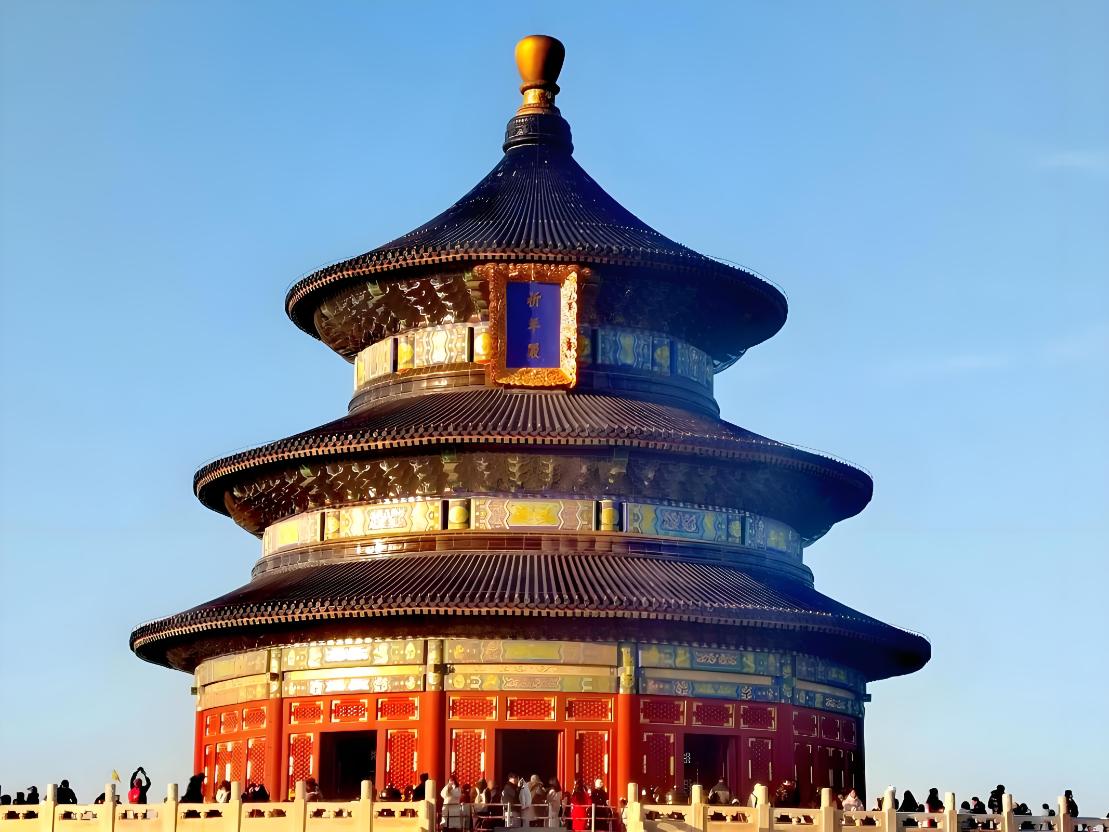
Among Beijing’s most iconic landmarks, the Temple of Heaven stands out as a serene and spiritual masterpiece that weaves together China’s ancient cosmology, imperial rituals, and artistic elegance. For travelers who wish to explore China’s rich heritage beyond Shanghai’s modern marvels, the Temple of Heaven offers a unique glimpse into the soul of a civilization that has revered harmony between heaven and earth for centuries.
Built in the early 15th century during the Ming Dynasty, the Temple of Heaven was where emperors performed elaborate ceremonies to pray for good harvests. This vast complex is not merely a group of stunning buildings; it is a meticulously designed spiritual space, where architecture, philosophy, and natural surroundings converge in perfect balance.
Historical and Cultural Significance
The Temple of Heaven was constructed in 1420 under the reign of Emperor Yongle, who also commissioned the Forbidden City. Used for over 500 years by Ming and Qing emperors, it played a central role in state rituals and Confucian ideology. Emperors, regarded as the “Sons of Heaven,” would come here to perform rites of cosmic importance, mediating between heaven and earth to secure blessings for their people.
The entire design of the complex reflects deep symbolic meaning. Circular buildings (symbolizing heaven) and square bases (representing earth) demonstrate the ancient belief in a round sky and square earth. The layout, orientation, and color schemes were all chosen to reflect harmony with cosmic principles.
Architectural Splendor and Symbolism
One of the most photographed landmarks in China, the Hall of Prayer for Good Harvests is the centerpiece of the Temple of Heaven. Standing 38 meters tall and built entirely of wood without nails, this circular building is an engineering marvel. Its triple-gabled roof, intricate carvings, and deep blue tiles evoke a sense of awe and divine reverence.
Equally captivating are the Echo Wall and the Circular Mound Altar. The Echo Wall, surrounding the Imperial Vault of Heaven, allows a whisper to be heard clearly on the opposite side—an acoustic phenomenon that delights visitors. The Circular Mound Altar, a multi-tiered marble platform, was where emperors performed the winter solstice ceremony. The number nine, considered the most powerful in ancient numerology, recurs throughout the design.
Cultural Encounters in a Living Park
Today, the Temple of Heaven is not only a UNESCO World Heritage Site but also a vibrant public park. Each morning, the grounds come alive with locals practicing Tai Chi, playing traditional instruments, dancing, and engaging in calligraphy. This everyday rhythm of life adds a layer of warmth and authenticity to the historical grandeur.
Visitors often find joy in these spontaneous moments—joining in a ribbon dance, learning a few Tai Chi moves, or simply watching elders playing Chinese chess under ancient cypress trees. The interaction between the monument’s sacred legacy and the vitality of local culture creates an experience that is both profound and personal.
What Makes It Special
Unlike many historic sites that feel frozen in time, the Temple of Heaven continues to breathe with life. Its expansive grounds, centuries-old trees, and tranquil gardens offer a space for reflection and discovery. The air is filled with a sense of calm that contrasts beautifully with the energy of nearby Beijing.
For architecture lovers, the complex is a lesson in symmetry, symbolism, and scale. For those interested in philosophy or spirituality, the temple’s alignment with cosmic principles and ritual purpose opens doors to understanding ancient Chinese thought. And for casual travelers, it’s simply a stunning place to wander and connect with something timeless.
Voices of the Visitors
Visitors are often struck by the harmony and beauty of the Temple of Heaven. One traveler shared, “It was like stepping into a painting. The colors, the quiet, the music in the park—it all felt like a meditation.”
Another said, “I didn’t expect to be so moved. The buildings are stunning, yes, but it was the atmosphere—a mix of sacred history and everyday life—that stayed with me.”
Many describe it as a highlight of their time in China, often citing the combination of culture, nature, and community as what makes it unforgettable.
Planning Your Visit
From Shanghai, reaching the Temple of Heaven is simple via high-speed train or a short flight to Beijing. Located in the city center, it is easily accessible by subway or taxi. The site is best visited in the early morning, when the light is soft and the park is alive with local activity.
Audio guides and multilingual signage enhance the experience, and guided tours are available for those who wish to dive deeper into the site’s rich symbolism. Comfortable walking shoes are recommended, as the park covers nearly 270 hectares.
A Sacred Encounter with the Past
The Temple of Heaven is far more than a monument. It is a place where architecture becomes philosophy, where rituals echo through time, and where modern life gently intersects with ancient tradition. It invites visitors to slow down, breathe deeply, and contemplate the delicate balance between the heavens and the earth.
As you explore the marvels of China, make time for the Temple of Heaven. Whether you’re drawn by its history, its beauty, or the quiet moments it offers, it will leave you with a deeper sense of connection to the spirit of this remarkable culture.