

A Bold Statement on Cultural Island
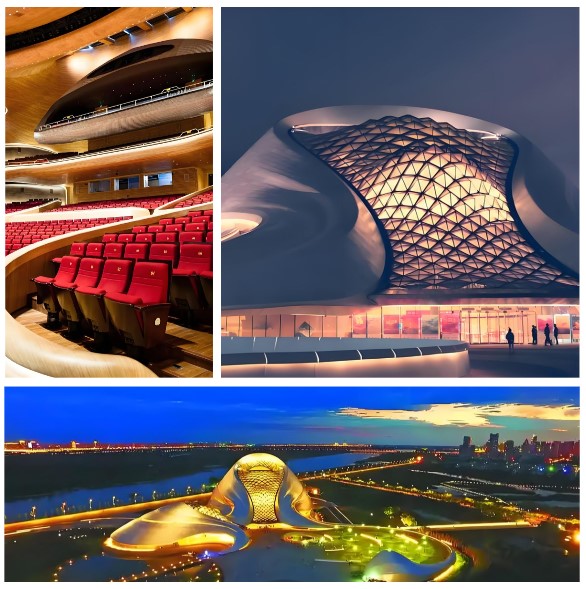
Rising on the banks of the Songhua River, Harbin Grand Theatre—also known as Harbin Opera House—is a landmark of modern design in the city. Designed by MAD Architects under Ma Yansong, the theatre opened in 2015 and blends seamlessly into the surrounding wetlands. Its fluid lines and contours mirror frozen landscapes and flowing rivers, offering a dramatic yet harmonious visual experience. It has become one of China’s most photographed contemporary buildings and a cultural symbol of Harbin.
Organic Design Inspired by Nature
Clad in sleek white aluminum, the façade curves like snowdrifts shaped by wind. The structure seems to grow naturally from the riverbank, while the timber interior evokes warmth and calm. Inside, the building includes a 1,538-seat grand theatre, a 414-seat intimate venue, and large public areas with open-air walkways and rooftop platforms that invite exploration and rest.
Sunset Views from the Rooftop
One of the most captivating features of the theatre is its rooftop, which visitors can climb freely without a ticket. From this elevated vantage point, the wetland landscape unfolds in all directions. At sunset, the building glows in golden light while the Songhua River reflects pastel skies. In winter, snow and ice wrap the theatre in soft whiteness, creating dreamlike scenes perfect for photography.
A Stage for Opera and Ballet
Harbin has long been known as China’s “City of Music.” Today, the Grand Theatre hosts a variety of high-level performances, from traditional Chinese opera and Western classical music to contemporary dance and avant-garde theatre. Its grand auditorium features state-of-the-art acoustics, while the smaller venue provides a more experimental, intimate setting. Many evenings also feature Russian-style vocal recitals, echoing the city’s deep ties with Slavic culture.
Interior Spaces: A Journey of Discovery
Visitors entering the main lobby are met with soaring ceilings, warm wood paneling, and panoramic glass walls that blur the boundary between inside and out. The theatre’s interior emphasizes open circulation and light. Even when no performances are scheduled, the building invites visitors to stroll, sit, and enjoy its meditative ambiance. A central staircase leads to elevated platforms and open areas that overlook both the lobby and the wetlands.
Integration of Public and Performance Spaces
Unlike most performance venues, Harbin Grand Theatre is also a public gathering space. Locals use its outer terraces and rooftop paths as recreational spaces, especially in spring and summer. Families come to picnic near the wetlands. Couples take evening walks. Teenagers gather for rooftop selfies. The entire building acts as a living sculpture that welcomes interaction—not just observation.
Wildlife and Nature at Your Feet
The surrounding wetland park is home to native birds, reeds, and seasonal blossoms. Depending on the time of year, visitors may see ducks swimming in the shallow ponds or herons gliding above the reeds. The theatre’s elevated paths offer prime views of these natural features, making it a perfect destination for birdwatchers and photographers alike.
Why It Resonates
Harbin Grand Theatre is powerful in its quietness. It’s not a monument to grandeur, but to fluidity and grace. The building whispers rather than shouts. Its movements reflect nature itself. It captures the essence of Harbin—cold yet luminous, bold yet poetic. It’s both a cultural beacon and a peaceful escape, embodying a balance between human creativity and environmental rhythm.
Visitor Reactions and Atmosphere
Travelers often describe the theatre as one of the most unexpectedly moving architectural experiences in China. Many visitors comment on the contrast between the theatre’s futuristic form and the simplicity of the surrounding wetlands. Common reflections include:
“This place feels like walking inside a snowflake.”
“It’s the only theatre I’ve visited where the building itself is the performance.”
“The best sunset in Harbin wasn’t on the river—it was on the roof of this theatre.”
Whether arriving for a performance or simply exploring the structure, guests often linger longer than planned. The atmosphere encourages stillness, reflection, and appreciation.
Best Tips for Visiting
Arrive late afternoon to enjoy both daylight architecture and golden hour rooftop views.
Check performance schedules online in advance and reserve early if planning to attend a show.
Dress warmly even in spring or fall, as winds from the river can be chilly.
Bring your camera but avoid bulky gear unless you have permission—casual photography is welcome.
Combine with a walk through nearby Cultural Island or an evening stroll along the Songhua River.
A Highlight of Modern China
Harbin Grand Theatre is more than a venue—it’s a poetic dialogue between form, culture, and environment. For those seeking a place that combines cutting-edge design with nature’s calm, this is one of China’s most memorable cultural destinations.