

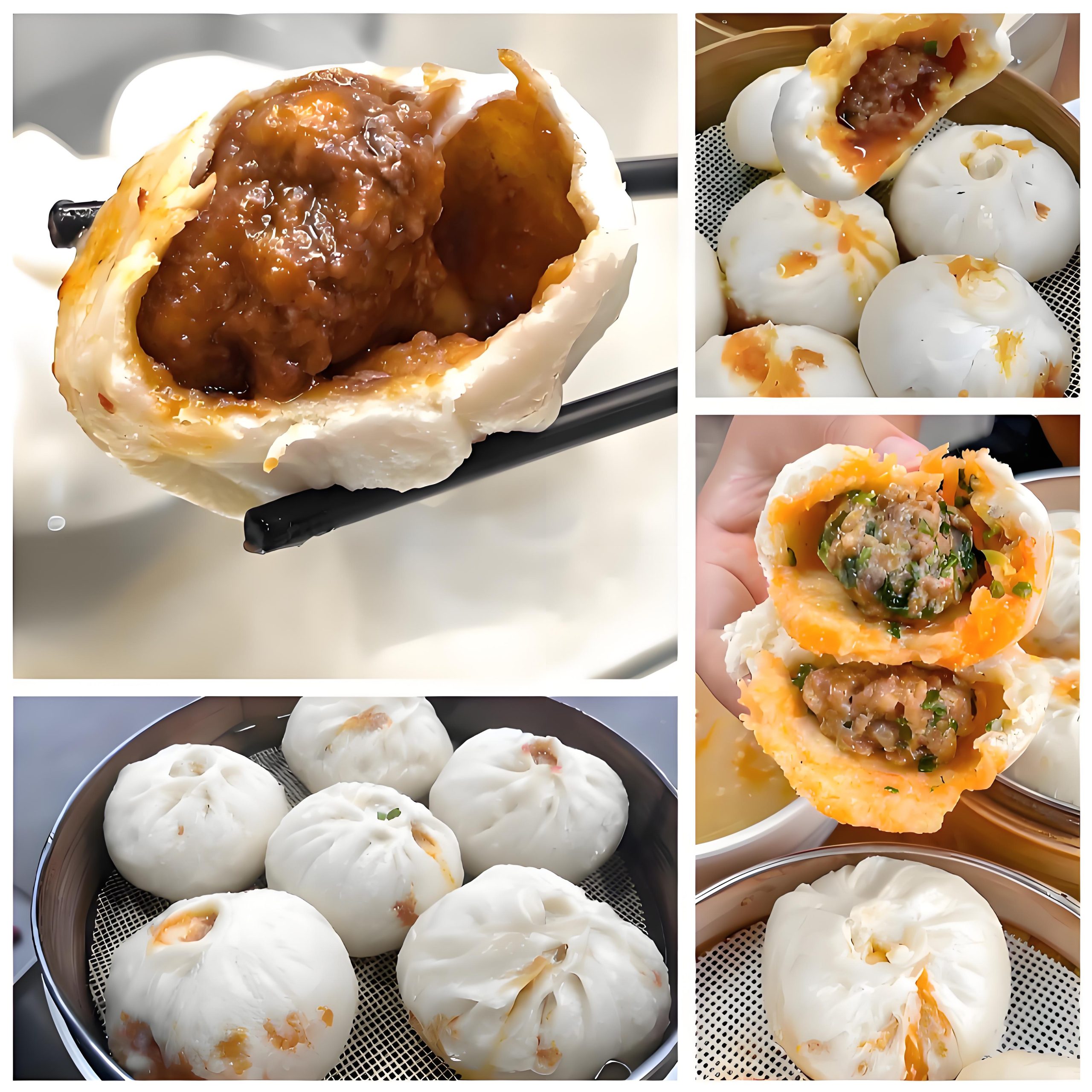
A Bite of Tradition in Every Street Corner
Walking through the streets and alleys of Yichang, the aroma of something savory and slightly spicy follows your every step. Tucked in steamed baskets or displayed neatly in street stalls, red oil baozi—steamed buns glistening with chili oil, their skin white and translucent, stuffed with flavorful fillings—have become a beloved daily indulgence for locals and an unforgettable taste experience for travelers.
The red oil baozi of Yichang is more than just a snack. It’s a cultural symbol, a comfort food, and a culinary tradition that connects modern city life with centuries of local history.
A History Carved by the River
The story of the red oil baozi begins in the misty past. Records trace its roots back to the Han dynasty, and mentions of steamed bread and buns from the region appear in ancient texts like the Bing Fu of the Eastern Jin period. According to local legend, the practice of wrapping fillings in dough began as early as the Spring and Autumn period, when steamed buns were used in ceremonial offerings to the poet Qu Yuan.
Geographically, Yichang lies at a vital juncture of the Yangtze River. During the Ming and Qing dynasties, the section of the river from Yichang to the Sichuan province was known as the Chuanjiang. This stretch was one of the most challenging and heavily trafficked river routes in global inland navigation history.
Ships transporting goods upstream would often stall at Yichang, as human strength was needed to pull the vessels through the turbulent gorges ahead. These were the days of the famed “Three Gorges trackers,” men who toiled with ropes and raw muscle to drag cargo through steep, unforgiving river passages.
To sustain their strength, these workers needed food that was nourishing, portable, and easy to eat. The red oil baozi, with its spicy kick and juicy interior, was perfect. Wrapped and steamed for portability, bursting with meat and spice, and often enjoyed with local rice wine, the baozi became a favored meal among trackers. Local inns and food stalls sprang up near every river bend and dangerous rapid, providing warm, spicy baozi to travelers and workers alike.
Flavors That Speak the Local Language
Today, the baozi may look different from those humble riverbank meals, but the soul remains the same. The modern red oil baozi is handcrafted with care. The dough is kneaded and folded by hand. The fillings are finely chopped and generously seasoned. They come in a variety of flavors, including pork, beef, lamb, and mixed vegetables. But it’s not just what’s inside that matters—it’s how it’s spiced.
Yichang’s baozi are famous for their diversity of heat: extra spicy, strong spicy, medium spicy, mildly spicy, fragrant spicy, numbing spicy (with Sichuan peppercorn), and even original, non-spicy versions. No matter the choice, the baozi is finished with a spoonful of signature red chili oil—aromatic, spicy, and full of umami.
The chili oil is not just about heat. It’s infused with garlic, fermented beans, sesame, and other secret ingredients that give it a rich, layered profile. The oil seeps into the steamed dough, soaking each bite with bold flavor and a warming sensation. Eating one is both satisfying and energizing—an ideal start to the day or a comforting midnight snack.
Where Tradition Meets Innovation
As the city has modernized, so too has the baozi. While still rooted in tradition, new generations of chefs and street vendors have introduced new techniques and flavors. Established names like Xianyipin Baozi, Jia Yuanwai Night Baozi, Lu Bao Bao, Ji Gouzi Baozi, Xiao Taoyuan Bao, Hu Ji Bao, and Xietan Bao have become local favorites, each offering their own interpretation of the classic red oil baozi.
Some shops use bamboo steamers over wood fires for a traditional smoky aroma, while others experiment with multi-colored dough or fusion-style fillings. In night markets and breakfast stalls alike, you’ll see lines of hungry customers drawn to the sight of steamy baskets and the smell of sizzling chili.
Despite the innovations, the essence of the baozi has remained unchanged. It still represents generosity, balance, and community—values deeply embedded in Yichang culture.
A Feast for the Senses
Eating a red oil baozi is a multi-sensory experience. The delicate skin gives way to a burst of broth and tender filling. The chili oil coats your lips, creating a gentle tingle that lingers after each bite. Every mouthful tells a story: of river journeys, of labor and resilience, of homespun meals shared across generations.
Locals cherish these buns not just for their flavor but for what they represent. As one long-time Yichang resident, Mr. Chen Hualin, puts it, “Yichang red oil baozi are hand-made, carefully filled, and full of nutrition. They are not just delicious—they’re an essential part of my life.”
Another traveler, Ms. Zhang Chengmin, shares, “Food is an extension of culture. Yichang’s red oil baozi combine the chewy richness of northern Chinese dough with the vibrant spice of Sichuan cuisine. I fell in love with it instantly.”
An Experience Worth Traveling For
For those visiting Yichang, tasting the red oil baozi is not optional—it’s essential. Whether you’re walking the riverside, exploring ancient alleyways, or finishing a hike through the Three Gorges region, there is nothing quite like sitting down with a fresh baozi in hand, steam rising into the morning air, the red oil pooling at the bottom of the wrapper, and the first bite warming you from the inside out.
Many local shops offer interactive experiences. Some allow visitors to try making baozi under the guidance of local masters—kneading the dough, stuffing the filling, folding the wrappers into pleated crescents, and finally watching them steam to perfection. It’s a fun, memorable way to engage with local food culture beyond simply tasting it.
The baozi of Yichang tells the story of a city in motion: from river port to modern hub, from hand-pulled boats to high-speed rail, from firewood kitchens to bustling night markets. And through it all, this humble bun has endured—not just as a street snack, but as a symbol of perseverance, community, and shared heritage.