

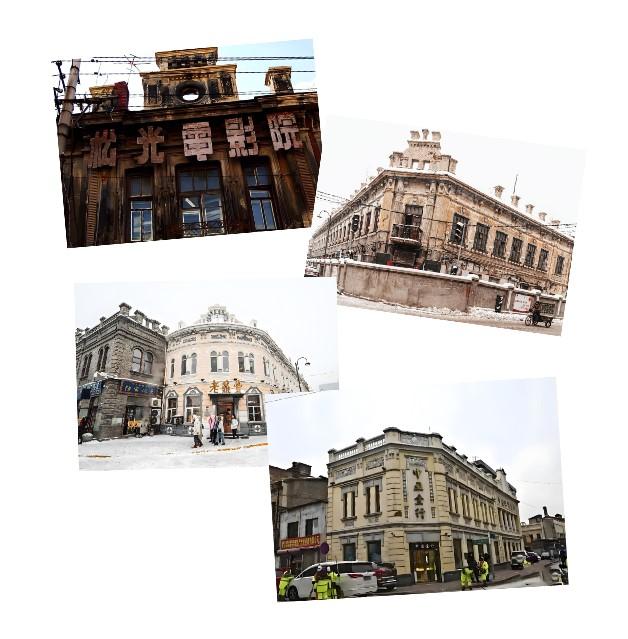
A Living Story in Brick and Stone
Hidden behind Harbin’s grand boulevards and frozen riverbanks lies Lao Dao Wai, a district that feels like stepping into a living, breathing time capsule. This is not a constructed theme park but a surviving neighborhood where history lingers in the curves of window frames, the cracks in cobblestone alleys, and the steam rising from street food stalls. Lao Dao Wai is home to the world’s largest collection of Chinese Baroque architecture, a fusion of European aesthetics and northern Chinese craftsmanship. Its buildings, once merchant homes and shopfronts, now host a kaleidoscope of food, photography, and storytelling.
The Architecture of a Forgotten Era
Unlike the symmetrical stone facades of Western Europe, Lao Dao Wai’s Chinese Baroque style is more organic. You’ll see ornate columns and cornices sitting atop grey brick walls, with wooden latticework peeking through arched windows. These are structures shaped not just by architects, but by blacksmiths, carpenters, and stonemasons who reimagined Baroque flair using Chinese techniques and materials. The result is a gritty elegance unique to Harbin, born in the early 20th century during the height of its trade and migration boom.
Walking through the neighborhood, it’s easy to be drawn into the fine details—stone-carved floral borders, carved phoenix motifs, faded reliefs of dragons. The buildings aren’t just historical remnants; many are still homes, noodle shops, or studios. The architecture reflects the spirit of adaptation and creativity, shaped by traders from Shandong, Russia, and beyond who settled here.
Zhangbao Alley: A Bite of the Past
One of the most beloved corners of Lao Dao Wai is Zhangbao Hutong, named for its famous vendor stalls and steaming baozi. The must-try dish here is the pork rib-stuffed steamed bun—juicy, fragrant, and wrapped in a doughy embrace that soaks up every drop of flavor. These buns are not gourmet fusion; they’re comfort food with a loyal local following. Eating them on a chilly Harbin afternoon, while standing beneath a carved stone balcony or watching children race past vintage bicycles, completes the experience.
Visitors often find that the food here matches the environment—hearty, hand-crafted, and full of character. Beyond the baozi, there are vendors selling candied hawthorn skewers, roasted sweet potatoes, and old-school sugar figurines shaped on the spot. The hutong is at once a kitchen and a stage, where every bite tells a story.
The Ruins of Songguang Cinema
One of the most atmospheric stops in Lao Dao Wai is the Songguang Cinema, a half-collapsed theater from the 1980s that now stands as an accidental monument to urban memory. Once a local institution for film screenings and first dates, its current state—abandoned but quietly majestic—has become a favorite for photographers and nostalgia seekers. Ivy has crept across its red-brick facade, while faded film posters and rusting chairs still whisper tales of packed audiences and crackling reels.
Stepping into this cinematic ruin offers a strange serenity. The building’s skeleton allows golden sunlight to filter through broken ceilings, creating an almost theatrical ambiance. It’s a haunting yet beautiful reminder of Harbin’s more recent cultural past. There’s no ticket booth, no tour guide—just curious wanderers and their imaginations.
A Haven for Photographers and Creatives
For those passionate about photography, Lao Dao Wai is a dream. The contrast between textured old walls and modern life—like neon-lit shops beneath peeling frescoes—creates compelling visual narratives. Pre-wedding shoots often take place here, with brides in red silk standing beside weathered doorways or posing under wrought-iron balconies. Artists and illustrators frequent the area to sketch street scenes, capturing the soft pastel colors of aged bricks and the dramatic winter shadows.
Authenticity and Urban Renewal
Unlike fully restored heritage zones elsewhere, Lao Dao Wai has preserved much of its raw charm. Some buildings are carefully restored, with new cafes and boutique shops inside, but many are still inhabited by longtime residents. This layering of time is what gives the district its soul—old men playing chess in alleyways, children racing scooters past art installations, the scent of scallion pancakes wafting through a doorway carved 80 years ago.
The balance between preservation and reinvention is visible throughout the area. Street art pays tribute to Baroque angels while murals of noodle stalls blend past with present. Some visitors describe it as Harbin’s equivalent of a European old town crossed with a northern Chinese flavor.
Local Voices and Memories
Visitors frequently praise Lao Dao Wai for its authenticity and emotional depth. Many say it’s where they finally “felt” Harbin—not just saw it. One traveler described it as a place “where the walls speak and the food sings.” Others are captivated by how the district preserves daily life: not through performances, but through people living in buildings that have survived empires, revolutions, and modern makeovers.
Locals, too, have a deep emotional connection to this space. Grandparents point out the stores they visited in their youth. Older couples walk the same alleys they courted in, now holding smartphones instead of cassette players.
Best Times and Tips
Lao Dao Wai is atmospheric year-round, but winter gives it a special cinematic beauty. Snow gathers on tiled roofs, and warm steam from kitchens curls up into the crisp air. Late afternoon, just before sunset, offers golden light that transforms the buildings into a glowing Baroque canvas. For photographers, this is prime time.
Weekdays are less crowded, allowing for quieter exploration. Comfortable shoes are recommended, as many streets are uneven cobblestones. While most signage is in Chinese, locals are friendly and often eager to share their recommendations, especially about food.
Not Just a District—A Dialogue With Time
Lao Dao Wai isn’t just about architecture or street food; it’s about the stories that live between bricks, the laughter echoing down narrow alleys, the memories both personal and collective. It’s about a city speaking through texture and taste, allowing every visitor to find their own thread in its tapestry.
Whether you come for the Baroque facades, the ribs-in-buns, the frozen nostalgia of a ruined cinema, or simply to feel time slow down, Lao Dao Wai leaves a lasting impression. It is Harbin’s heartbeat rendered in stone and snow, history and hunger, silence and steam.