

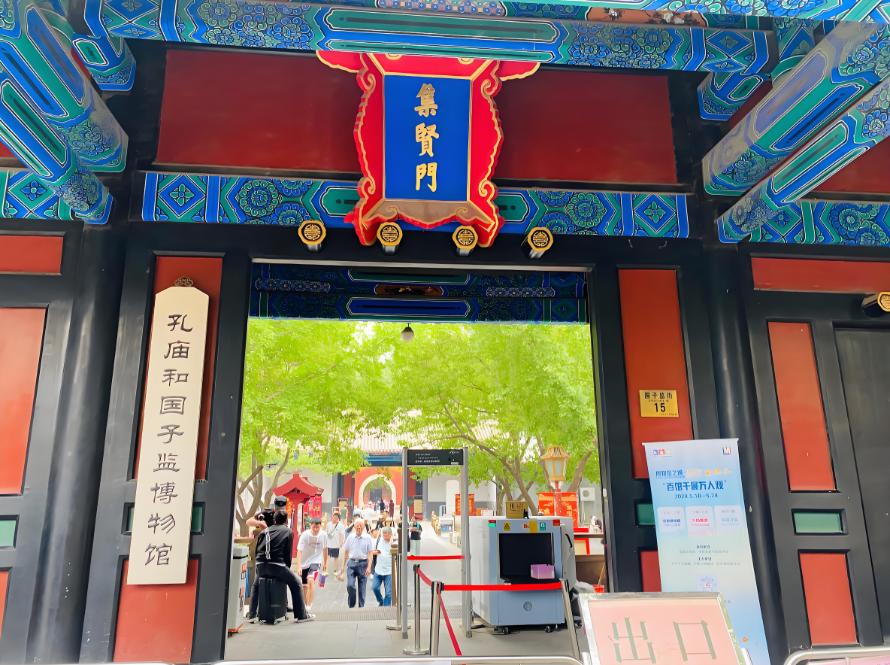
Situated in the heart of Beijing, the Confucius Temple and the adjacent Imperial College stand as monumental testaments to China’s profound reverence for education, philosophy, and culture. These historic sites offer visitors a unique window into the intellectual and spiritual foundations that shaped Chinese civilization for over a millennium.
For travelers interested in understanding the cultural heartbeat of China, a visit to the Confucius Temple and Imperial College reveals the deep respect for learning, ritual, and tradition that continues to influence modern life.
Historical Significance
The Confucius Temple in Beijing is the second largest in China, after the one in Confucius’s hometown of Qufu. Built during the Yuan Dynasty in 1302, it served as a sacred place to honor Confucius, the great Chinese philosopher whose teachings laid the groundwork for Chinese ethics, governance, and education.
The adjacent Imperial College, or Guozijian, was the highest educational institution in imperial China for centuries. Established during the Yuan Dynasty and expanded under the Ming and Qing Dynasties, it was where elite scholars were trained to serve in government positions through the highly competitive imperial examination system.
Together, these sites embody the central role of Confucian thought in shaping Chinese society, law, and culture across dynasties.
Cultural and Architectural Highlights
The Confucius Temple’s design reflects traditional Chinese architectural principles, with a sequence of courtyards, gates, and halls arranged along a north-south axis. The main hall houses the spirit tablets of Confucius and his distinguished disciples, surrounded by intricate wood carvings and calligraphy that celebrate their wisdom.
Visitors can explore over 100 stone tablets engraved with poems and eulogies written by emperors and scholars, showcasing the respect and admiration for Confucius across centuries.
The Imperial College, located just beside the temple, features classical gardens, lecture halls, and dormitories where students once lived and studied. The campus is centered around the Dacheng Hall, the largest building, where important ceremonies and teachings took place.
The elegant layout of the college—with its serene ponds, willow trees, and stone bridges—offers a peaceful setting that contrasts with the intellectual rigor once demanded of its students.
Philosophical and Educational Legacy
Confucius’s philosophy emphasizes moral integrity, social harmony, and respect for hierarchy and learning. These principles guided China’s governance and societal values for over two thousand years. The Confucius Temple served not only as a religious site but also as a cultural hub where rituals honoring Confucius were performed annually, reinforcing these values.
The Imperial College played a crucial role in educating the bureaucrats who governed the vast empire. Success in the imperial examinations, which tested knowledge of Confucian classics and literary skills, was seen as the pathway to prestige and influence.
Understanding this system helps visitors appreciate how education and philosophy were deeply intertwined with power and societal order in historical China.
Unique Features and Visitor Experience
One of the most compelling features of these sites is their atmosphere of reverence and tranquility. Unlike many busy tourist attractions, the Confucius Temple and Imperial College offer a quiet space to reflect on the depth of Chinese intellectual heritage.
Walking through the peaceful courtyards, visitors often find themselves drawn to the elegant stone steles, ancient cypress trees, and meticulously maintained gardens. The blend of cultural artifacts, historical architecture, and natural beauty creates a contemplative environment.
Throughout the year, traditional ceremonies and cultural performances occasionally take place, providing an even richer experience of Confucian rituals and scholarly traditions.
Attractions Nearby
Located near the Lama Temple and the Confucius Temple Street, visitors can easily combine a visit to the temple and college with other cultural explorations. Nearby shops sell traditional books, calligraphy tools, and souvenirs, offering a chance to take home a piece of this heritage.
Cafes and teahouses in the surrounding Hutong neighborhoods provide opportunities to relax and experience local life after exploring the historic sites.
Visitor Impressions
Visitors often describe the Confucius Temple and Imperial College as enlightening and inspiring. One traveler noted, “It was fascinating to see how education and philosophy shaped an entire civilization. The peacefulness of the temple grounds added to the sense of wisdom and respect.”
Others have appreciated the architectural beauty and historical depth. “The stone tablets with ancient writings and the grand halls of the Imperial College made history come alive,” shared another visitor.
Many find the visit to be a highlight of their cultural journey, offering insights not just into China’s past but also its continuing respect for learning and tradition.
Practical Information for Visitors
The Confucius Temple and Imperial College are best visited during weekdays to avoid larger crowds. Early mornings provide a quiet atmosphere ideal for photography and reflection.
Entrance tickets are affordable, and guided tours are available in multiple languages, enriching the experience with detailed historical and cultural context.
The sites are easily accessible by public transport, with nearby subway stations and bus routes connecting them to other major attractions in Beijing.
A Journey into China’s Intellectual Heritage
The Confucius Temple and Imperial College stand as enduring symbols of China’s intellectual and cultural legacy. They invite visitors to explore a world where philosophy, education, and ritual combined to shape society and governance for centuries.
For those seeking a meaningful connection with China’s past, these historic sites provide a serene and thought-provoking journey into the heart of Chinese civilization.
Whether marveling at the intricate architecture, reading the ancient inscriptions, or simply enjoying the tranquil gardens, visitors leave with a deeper appreciation of the values that continue to influence China today.