
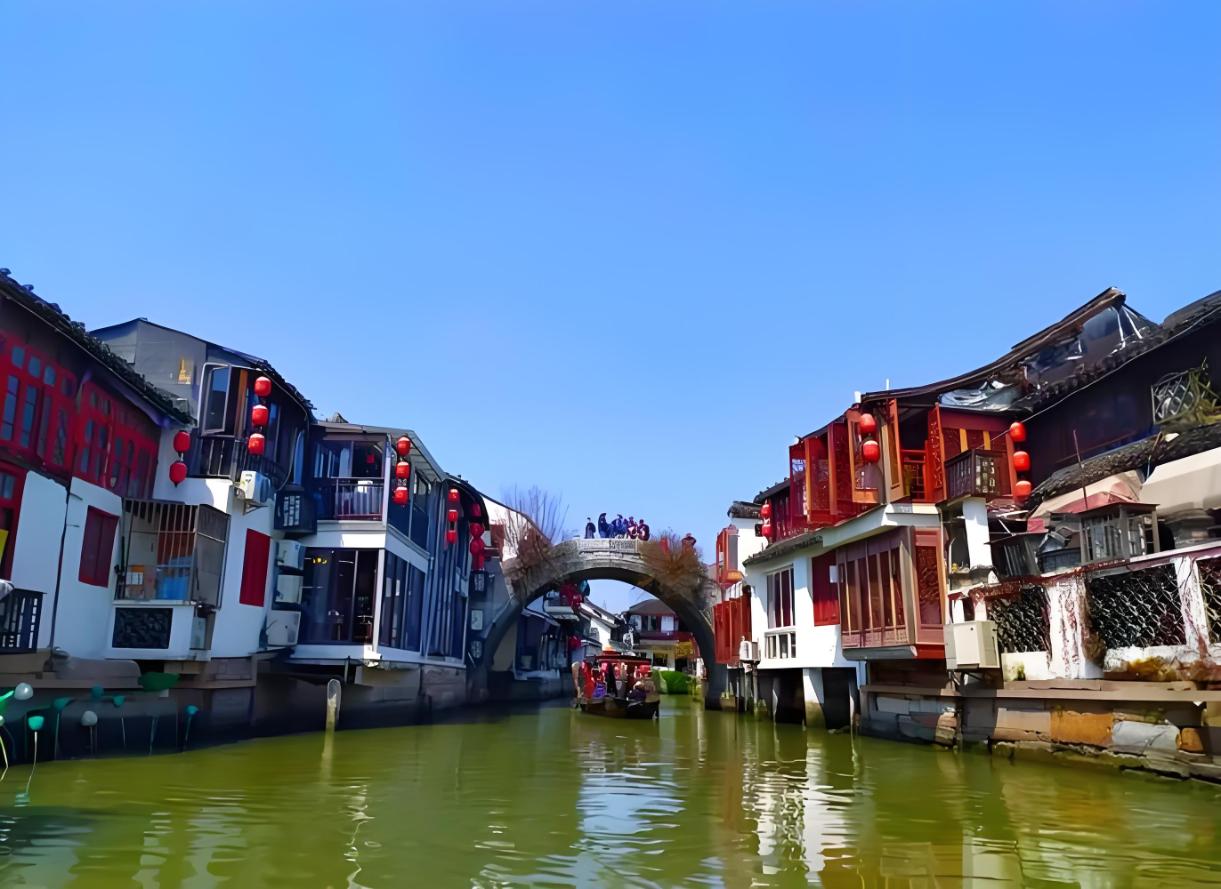
Just 50 minutes from the modern skyscrapers of downtown Shanghai lies a different world — Zhujiajiao (朱家角), a picturesque water town often referred to as the “Venice of Shanghai.” For Western travelers seeking a more authentic and historical side of China, Zhujiajiao offers an enchanting mix of ancient architecture, winding canals, traditional markets, and human warmth that feels like a step back in time.
🕰️ A Living Tapestry of History
Zhujiajiao has a history stretching back over 1,700 years, with origins in the Yuan Dynasty (13th century). Once a bustling trading post thanks to its strategic location along rivers and canals, it became a prosperous market town during the Ming and Qing dynasties. Today, much of that legacy remains — not in museums, but in the cobblestone streets, arched bridges, and whitewashed houses reflected in the still waters.
The town’s name, “Zhu Jia Jiao,” literally means “Zhu family’s corner,” and although it has long outgrown its humble beginnings, it still retains a village-like charm that contrasts beautifully with the ultramodern pace of Shanghai proper.
🚤 What Makes Zhujiajiao Special for Foreign Visitors?
1. Romantic Canal Views & Gondola Rides
Zhujiajiao is famous for its network of canals, spanned by 36 ancient bridges. The most iconic is Fangsheng Bridge (放生桥), built in 1571, with its graceful five arches and dragon carvings.
Many tourists opt to take a traditional wooden boat ride, which glides silently past weathered stone buildings, flowering balconies, and street vendors selling everything from handmade fans to rice dumplings. For visitors from the West, the gondola-like experience feels both romantic and meditative — an unforgettable way to view daily life unfolding on the water.
“It felt like being in a Chinese painting. Peaceful, poetic, and so different from anything I’ve seen before.”
— Emma K., visitor from the UK
2. Rich Local Culture & Architecture
Strolling through Zhujiajiao is like walking through a living museum. Key highlights include:
🏯 Ke Zhi Garden (课植园) – A classical Qing Dynasty garden villa with pavilions, lotus ponds, and rockeries, reflecting traditional Chinese garden aesthetics.
🛕 City God Temple (Chenghuang Miao) – A Taoist temple where locals still light incense and pray, showcasing living religious traditions.
🖼️ Post Office Museum – Housed in a restored 19th-century building, this small museum tells the story of early postal services in the region.
What makes these sites especially appealing to Western travelers is their intimacy — unlike the grandeur of imperial palaces, these spaces are quiet, human-scale, and immersive.
3. Street Life & Traditional Markets
Zhujiajiao is not only about quiet beauty — it’s alive with vibrant local energy. The main pedestrian street, North Street (北大街), is lined with shops selling handicrafts, local snacks, and folk art. You’ll find:
🥟 Zongzi (glutinous rice dumplings wrapped in bamboo leaves)
🍵 Freshly brewed flower teas
🧧 Handmade paper cuttings, silk embroidery, and painted fans
You may also see artisans at work — carving wood, shaping clay, or writing calligraphy. Unlike commercial tourist zones, much of the trade here still caters to locals, giving visitors a more authentic slice of Chinese life.
“We spent hours just wandering the streets, sampling food, and chatting with friendly shopkeepers. It felt real, not staged.”
— David M., traveler from Canada
4. Peaceful Escape from the City
One of Zhujiajiao’s greatest attractions is the sense of peace it offers, especially compared to the fast pace of Shanghai’s urban center. Western tourists often find it to be a refreshing cultural detox — a place to slow down, observe, and absorb.
Many visitors choose to spend a full day here, or even stay overnight in one of the charming riverside guesthouses, where traditional aesthetics meet modern comfort.
✨ Local Legends & Cultural Significance
Like many ancient towns in China, Zhujiajiao has its own legends — of ancient scholars, merchants, and mystical events that shaped its destiny. These stories are preserved not just in writing, but in the design of temples, bridges, and local customs.
For example, Fangsheng Bridge (literally “Bridge of Releasing Life”) got its name from the Buddhist practice of releasing fish into the water as an act of compassion. Even today, you might see people practicing this tradition near the bridge.
🗺️ Practical Information
Location: Qingpu District, about 48 km west of downtown Shanghai
How to Get There:
🚇 Metro Line 17 → Get off at Zhujiajiao Station → 15-minute walk to Old Town
🚗 Or take a day tour/ride-hailing service (approx. 1 hour from central Shanghai)Entrance: Walking the town is free, but certain attractions (like Ke Zhi Garden or boat rides) require small entrance fees (~10–20 RMB)
Opening Hours: Most attractions open from 8:30 AM to 5:00 PM
🧳 Travel Tips
Best time to visit: Spring (April–May) and Autumn (September–October) for mild weather and fewer crowds.
Avoid weekends and national holidays for a more tranquil experience.
Try joining a guided tour or hiring a local English-speaking guide to fully appreciate the historical context.
Bring cash (or Alipay/WeChat Pay) for small shops and food stalls.
While Shanghai is often known for its futuristic skyline and high-speed lifestyle, Zhujiajiao tells a different story — one of history, humanity, and harmony with water and nature. It’s the perfect destination for foreign travelers looking to balance modern experiences with timeless tradition.
Whether you’re a photographer capturing ancient bridges, a foodie exploring local delicacies, or a curious traveler searching for hidden corners of culture, Zhujiajiao is more than worth the journey.
“In Zhujiajiao, I saw the China I dreamed of — graceful, historic, and deeply soulful.”
— Sofia L., visitor from Italy