
When visiting Shanghai, one name appears on nearly every travel itinerary: Nanjing Road Pedestrian Street. Known as the city’s most iconic shopping boulevard, this vibrant thoroughfare is far more than a retail paradise — it is a cultural journey that reflects the evolution of modern China, from colonial-era glamour to futuristic innovation.
For foreign visitors, especially those from Europe and North America, Nanjing Road offers an unforgettable experience where past and present collide, where luxury boutiques stand beside century-old department stores, and where the pulse of Shanghai’s urban life beats strongest.
🕰️ A Storied History
Nanjing Road (南京路) has roots dating back to the mid-19th century, when Shanghai was opened as a treaty port after the First Opium War. Originally known as “Park Lane,” it became the commercial backbone of the International Settlement — the part of Shanghai controlled by foreign powers.
By the early 20th century, it had evolved into a glamorous strip filled with European-style buildings, cafés, and department stores, frequented by expatriates, Chinese elites, and international visitors alike. The famous No. 1 Department Store, founded in 1934, was once a symbol of consumer luxury in pre-war China.
After the establishment of the People’s Republic of China, the street entered a new era as a bustling commercial hub for ordinary citizens. In the late 1990s, a major transformation took place: part of Nanjing Road was pedestrianized, making it one of the world’s longest and most vibrant car-free shopping streets, stretching over 5.5 kilometers.
🚶♀️ A Walk Through Time and Commerce
Today, Nanjing Road is typically divided into two sections:
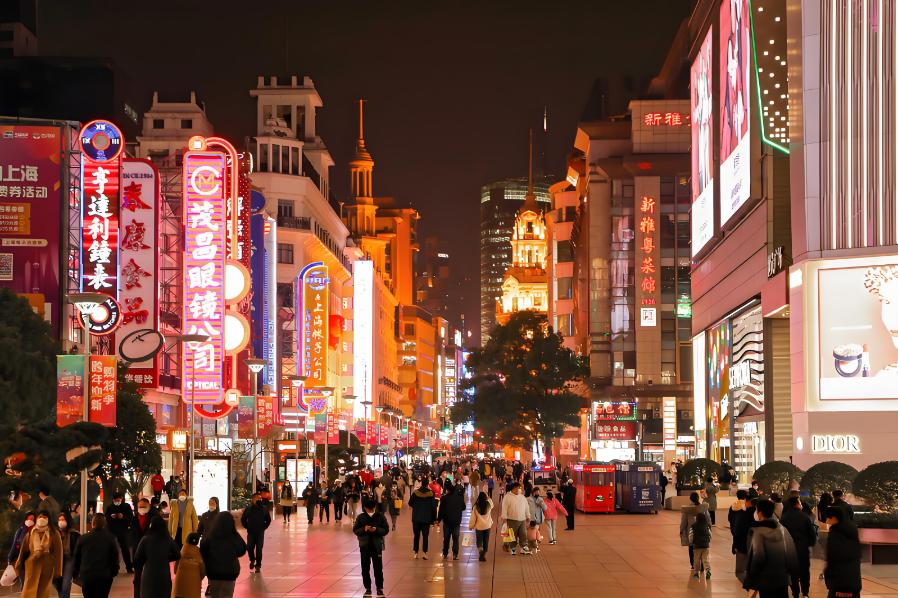
East Nanjing Road (Nanjing Dong Lu): From People’s Square to the Bund, this is the famous pedestrianized zone and the most visited section. It is known for its neon signs, historic architecture, and high foot traffic — sometimes over a million visitors a day during holidays.
West Nanjing Road (Nanjing Xi Lu): A more upscale, modernized section with luxury shopping malls, office buildings, and 5-star hotels.
For tourists, East Nanjing Road is the star. It’s a place to people-watch, photograph old and new landmarks, enjoy snacks, and feel the heartbeat of Shanghai.
“It’s like Times Square met the Champs-Élysées, with a Chinese soul.”
— Amanda T., traveler from Canada
🛍️ Shopping: From Traditional to Trendy
Whether you’re searching for international brands or uniquely Chinese souvenirs, Nanjing Road delivers. You’ll find:
🏢 Time-honored Chinese department stores like Shanghai No.1 Department Store and Shanghai First Foodhall
👗 Global fashion giants including H&M, Zara, Uniqlo, Nike, and luxury houses like Louis Vuitton and Cartier
🎁 Souvenir and tea shops, selling silk scarves, panda plush toys, traditional snacks, and calligraphy sets
It’s a place where young local fashionistas, curious travelers, and elderly locals shopping for herbs all converge.
🏮 Cultural Highlights & Local Charm
Beyond the retail experience, Nanjing Road offers deep cultural value for Western travelers looking to understand Shanghai’s identity:
🏛️ Architectural Heritage: Many facades on Nanjing East Road date back to the 1920s and 1930s, showcasing Art Deco, neoclassical, and Shikumen-inspired designs. Historic buildings like the Peace Hotel or the former Sincere Department Store tell stories of colonial ambition and modern transformation.
🎭 Street Performers & Local Artists: You’ll often find musicians, dancers, and even traditional Chinese opera performers adding flair to the street.
🧓 People’s Square (Renmin Guangchang): At the western end of Nanjing East Road lies this symbolic civic center, home to the Shanghai Museum, the Grand Theatre, and the Urban Planning Exhibition Center — ideal for those interested in Shanghai’s history and future.
“We stumbled upon a live guzheng performance under glowing lanterns. It was magical.”
— Lucas M., visitor from Germany
🍡 Food & Snacks: A Taste of Shanghai
Nanjing Road is also a street food paradise. Some local favorites include:
Shengjian Bao (pan-fried pork buns)
Candied hawthorn skewers (Tanghulu)
Scallion pancakes, bubble tea, and sweet tofu pudding
The First Foodhall is a must-visit for foreign foodies — a multi-floor emporium of traditional Chinese snacks, pickles, dried fruits, and regional specialties. It’s a great place to explore unfamiliar flavors or pick up edible souvenirs.
“We tried everything — buns, sesame candy, rose pastries. It was like a snack adventure!”
— Olivia & James, couple from the UK
🌆 Night Walk: Nanjing Road Illuminated
If you visit only once, make it after sunset. That’s when the street transforms into a dazzling spectacle of neon lights, glowing signs, and lively energy.
You can stroll all the way to The Bund, where the colonial facades meet the shimmering skyline of Pudong. The contrast between old and new is especially breathtaking at night, offering some of the best photo ops in the city.
For a truly fun experience, take the mini sightseeing train that runs along the pedestrian street — it’s kitschy, charming, and popular among families and tourists alike.
📍 Travel Info & Tips
Metro Access:
East Nanjing Road: Line 2 or 10, Nanjing East Road Station
West Nanjing Road: Line 2, 12, or 13, West Nanjing Road Station
Best Time to Visit:
Weekday evenings or early mornings (to avoid crowds)
Late autumn and spring for mild weather
Accessibility: The pedestrian zone is wheelchair- and stroller-friendly, with clear signage in both English and Chinese.
For first-time travelers to Shanghai, Nanjing Road is more than a shopping street — it is an emblem of the city’s transformation from a colonial trading port to a modern megacity. It tells a story of adaptation, ambition, and cultural fusion.
Whether you’re shopping for the latest fashion, admiring Art Deco buildings, tasting authentic snacks, or simply watching the city come alive, Nanjing Road is a must-see that truly captures the soul of Shanghai.
“It was the perfect first stop. We got history, food, souvenirs, and a real sense of the city’s energy — all in one place.”
— Natalie H., tourist from the USA