
A Gem Among the Clouds
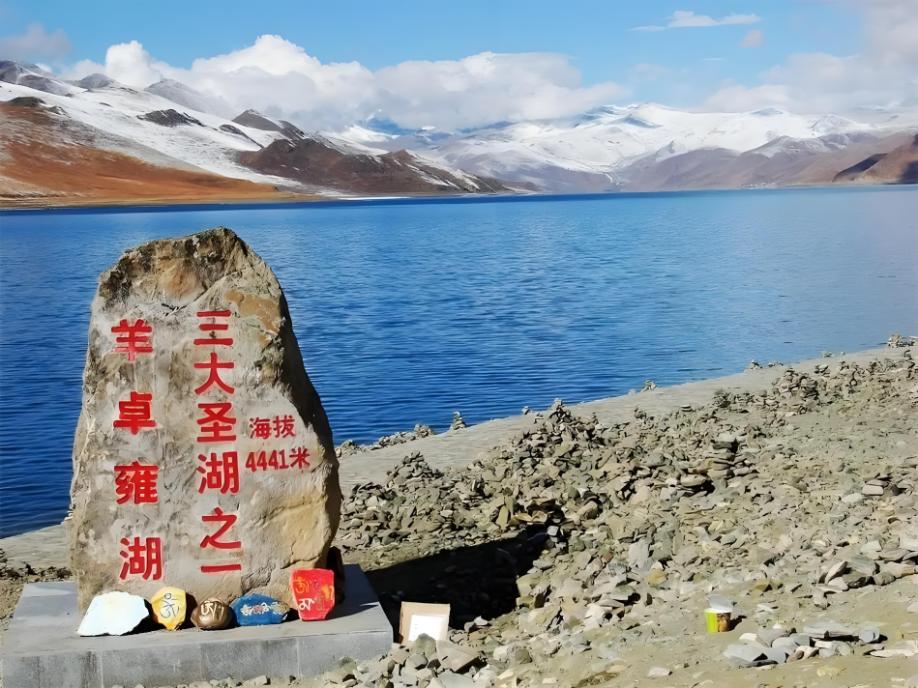
Yamdrok Lake, known in Tibetan as “Yamdrok Yumtso,” is one of Tibet’s most stunning and sacred bodies of water. Located about 100 kilometers southwest of Lhasa, this freshwater lake sits at an altitude of over 4,400 meters, shimmering with vivid shades of turquoise and sapphire. Known poetically as the “Swan Lake” for its graceful curves and celestial beauty, Yamdrok is a destination that captures both the heart and imagination.
Legend holds that Yamdrok is the lifeblood of Tibet, and that should it ever dry up, Tibet would no longer be habitable. For centuries, it has been revered as a spiritual site, often visited by pilgrims, monks, and lamas who believe the lake has life-giving and purifying powers. Its mirror-like waters and surrounding snow-capped mountains create a sense of tranquility that is both humbling and inspiring.
The Lake That Changes with the Light
What sets Yamdrok apart is not just its scale—spanning over 70 kilometers in length—but the way its color and mood shift with the sky. On clear days, the lake glows with a surreal brilliance that rivals even the most tropical seas. On cloudy or windy days, it turns a steel blue, adding a mysterious depth to the landscape.
Surrounding the lake are rolling hills, pastureland, and remote villages where traditional Tibetan life continues largely unchanged. Prayer flags flutter in the wind, and herders guide their yaks along ancient trails. It is a living tableau of highland culture, untouched and expansive.
An Epic Journey Around the Shore
One of the most unique ways to experience Yamdrok Lake is by driving or cycling around its perimeter. The full loop spans approximately 250 kilometers and passes through remote villages, mountain passes, and panoramic viewpoints that offer endless photographic opportunities. For those up for the challenge, the circuit is a moving meditation—every curve of the road revealing a new facet of the lake’s splendor.
Along the route, travelers can stop at small Tibetan settlements where locals may offer butter tea, handmade crafts, or simple but hearty meals. These moments of connection add a deeply human dimension to the natural beauty, and allow for insights into Tibetan customs and hospitality.
A Spiritual and Visual Sanctuary
Spiritual seekers often visit Yamdrok to make offerings or perform a personal kora (ritual circumambulation) along the lakeshore. Whether walking a few kilometers or embarking on a longer trek, the experience is contemplative and grounding. The sound of wind over water, the distant murmur of chanting, and the sight of ancient monasteries on the hillsides enhance the sense of being in a sacred space.
The lake is also flanked by historical sites, such as Samding Monastery, which is unique for being led by a female reincarnate lama. Set on a hill overlooking the lake, the monastery offers not only spiritual enrichment but also a breathtaking view of the entire area.
Sunrises, Silences, and Unfiltered Nature
Staying overnight near Yamdrok—either in a nearby guesthouse or camp—offers a chance to witness the lake at its most peaceful. Early mornings bring soft pink hues to the sky, which then reflect in the water, casting a magical glow across the landscape. At night, under clear skies, the stars appear startlingly close, their reflections flickering on the lake’s surface.
Without city lights or crowds, Yamdrok Lake offers an unfiltered connection to nature. The silence is profound, broken only by the whisper of wind, the occasional bark of a Tibetan mastiff, or the distant bleating of sheep. For many, it is in these quiet moments that the true power of the place becomes clear.
Impressions from the Road
Visitors frequently describe their time at Yamdrok as dreamlike. The vibrant color of the lake, the grandeur of the surrounding peaks, and the simple grace of local life come together in a way that feels both cinematic and deeply real. It’s common to hear travelers say that their visit to Yamdrok changed how they see the world—less rushed, more grounded, and open to wonder.
Others speak of an emotional pull, a sense of calm or introspection that lingers long after departure. Many are surprised by the friendliness of the villagers and the peaceful pace of life that unfolds around the lake.
Planning the Trip
Getting to Yamdrok Lake typically involves a drive from Lhasa over the Kamba-la Pass, which offers a dramatic first view of the lake below. This is often a highlight in itself, as the pass sits at 4,794 meters and provides sweeping vistas of the valley and glacier-covered mountains.
Because of the altitude, travelers should plan time to acclimate in Lhasa before heading out. Day trips are possible, but staying longer allows for deeper exploration. Essentials include layered clothing, sun protection, and extra camera batteries—there’s no shortage of photo opportunities.
Whether for spiritual reflection, scenic immersion, or the simple pleasure of slowing down, Yamdrok Lake remains one of Tibet’s most treasured experiences. It is a place that speaks to the soul, offering not only beauty but also a deeper sense of presence and connection to the world above the clouds.