

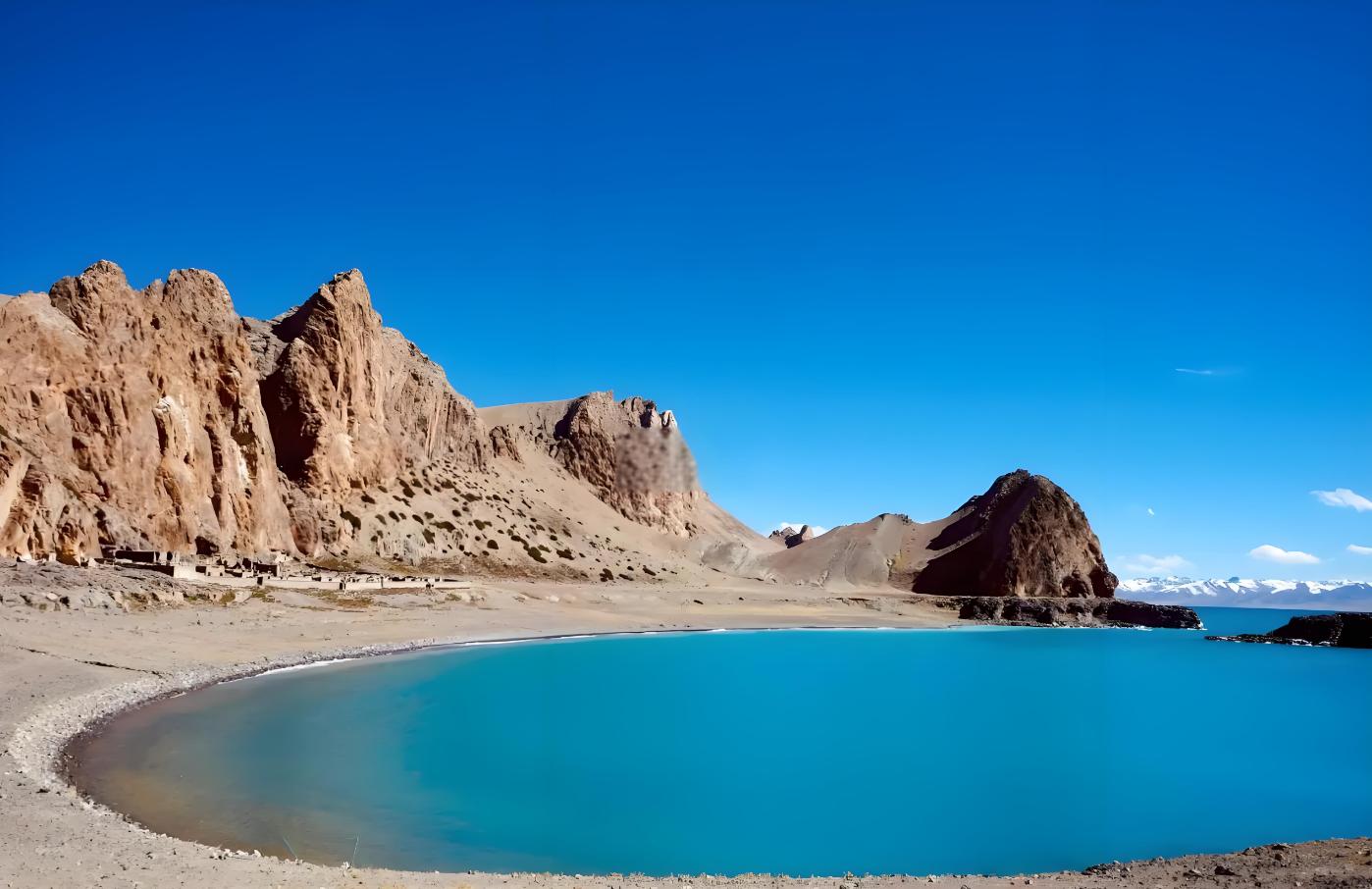
A Sacred Mirror in the Clouds
Stretching across the vast Tibetan plateau at an altitude of 4,718 meters, Namtso Lake is one of the most striking natural wonders in Tibet. As one of the three holiest lakes in Tibetan Buddhism, it is revered not only for its ethereal beauty but also for its spiritual resonance. The name “Namtso” translates to “Heavenly Lake,” and from the moment the turquoise waters come into view, it becomes clear why.
Encircled by the snow-capped Nyenchen Tanglha Mountains and extending into the horizon with crystal clarity, Namtso feels suspended between earth and sky. The interplay of light and cloud, ice and reflection, makes it a natural mirror that changes with every hour. It is not only a place of pilgrimage but also a site of awe for anyone seeking the raw, unfiltered essence of Tibet’s high-altitude landscape.
A Landscape Woven with Belief
In Tibetan Buddhism, lakes like Namtso are believed to be manifestations of deities. Pilgrims have journeyed here for centuries, especially during the Year of the Sheep in the Tibetan calendar, when the merit of performing a lake circumambulation is believed to be multiplied. The practice of walking around the lake—known as “kora”—is both a physical challenge and a deeply spiritual act.
Along the kora path, travelers encounter prayer flags fluttering in the wind, stone cairns built by other pilgrims, and caves once inhabited by meditating monks. The route can take several days to complete, depending on weather and one’s stamina. Even for those not undertaking the full pilgrimage, shorter hikes along the lake’s shores offer glimpses of this sacred rhythm of devotion.
A Night by the Sacred Waters
One of the most memorable ways to experience Namtso is by staying overnight in a lakeside tent. Though basic in comfort, these temporary lodgings offer something that no hotel can: direct communion with nature. As evening falls, the lake becomes still and glassy, reflecting the last light of the sun as it paints the Nyenchen Tanglha range in shades of gold and rose.
The cold can be intense, especially outside of summer, but the rewards are unmatched. At dawn, the first rays of sunlight break over the mountains and bathe the lake in a warm, radiant glow. For many, watching this moment in silence—with only the wind and the occasional call of a migratory bird—is one of the most profound experiences of their journey.
Ecology and Timeless Beauty
Namtso is also home to an array of wildlife, especially in spring and summer when migratory birds, including bar-headed geese and brown-headed gulls, arrive to nest. Yaks and nomadic herders dot the grasslands near the lake, offering a living picture of a lifestyle that has endured for centuries. The contrast between the serenity of the lake and the ruggedness of life at this altitude deepens the appreciation for the resilience and harmony of Tibetan culture.
The changing colors of the lake—its blues shifting from pale aquamarine to deep sapphire—are caused by mineral content, sunlight angles, and the movement of wind across its surface. Clouds race above, sometimes casting dramatic shadows that seem to dance across the water. It’s a photographer’s dream, but even the best images struggle to capture the atmosphere and scale.
What Visitors Say
Travelers consistently describe their time at Namtso as “otherworldly” or “soul-cleansing.” Many remark on the sense of timelessness the lake evokes—how easy it is to lose track of time in a place where modern life feels impossibly distant. Some speak of feeling unexpectedly emotional, overcome by the stark beauty and spiritual charge of the landscape.
Others praise the sense of connection to the people they meet here—nomads sharing butter tea, monks offering quiet blessings, or fellow visitors pausing together to take in the view. These simple moments often become the memories that linger longest.
Practical Notes for the Journey
Visiting Namtso requires preparation. At over 4,700 meters, altitude sickness is a real concern, so travelers should spend time acclimating in Lhasa before making the journey. Most visitors reach the lake by vehicle on a well-maintained but high-altitude road that crosses the 5,190-meter Laken Pass, offering panoramic views along the way.
Weather can shift quickly, with sun, wind, snow, and rain often arriving within a single day. Layers, sun protection, and water are essential. Facilities are limited, and electricity is usually only available in short bursts from solar power.
Still, these are small trade-offs for access to a place of such purity. In the modern world, few places remain so untouched, so open, and so deeply interwoven with myth, nature, and introspection.
To visit Namtso is not only to see one of the highest lakes on Earth—it is to feel, if only for a while, as though you are standing closer to the sky than ever before.