

🔖 “A peaceful oasis.”
“This was one of my favorite stops in Shanghai. It felt calm and reflective, and I loved how the architecture brought a piece of Europe to China.”
— Olivia H., UK
🔖 “A surprise gem.”
“Didn’t expect to find such a beautiful cathedral in the middle of a busy shopping area. It’s well-preserved and truly spiritual.”
— Brian T., USA
🔖 “A cultural bridge.”
“The stained glass windows with Chinese patterns were incredible — a true example of East meeting West.”
— Isabelle R., France
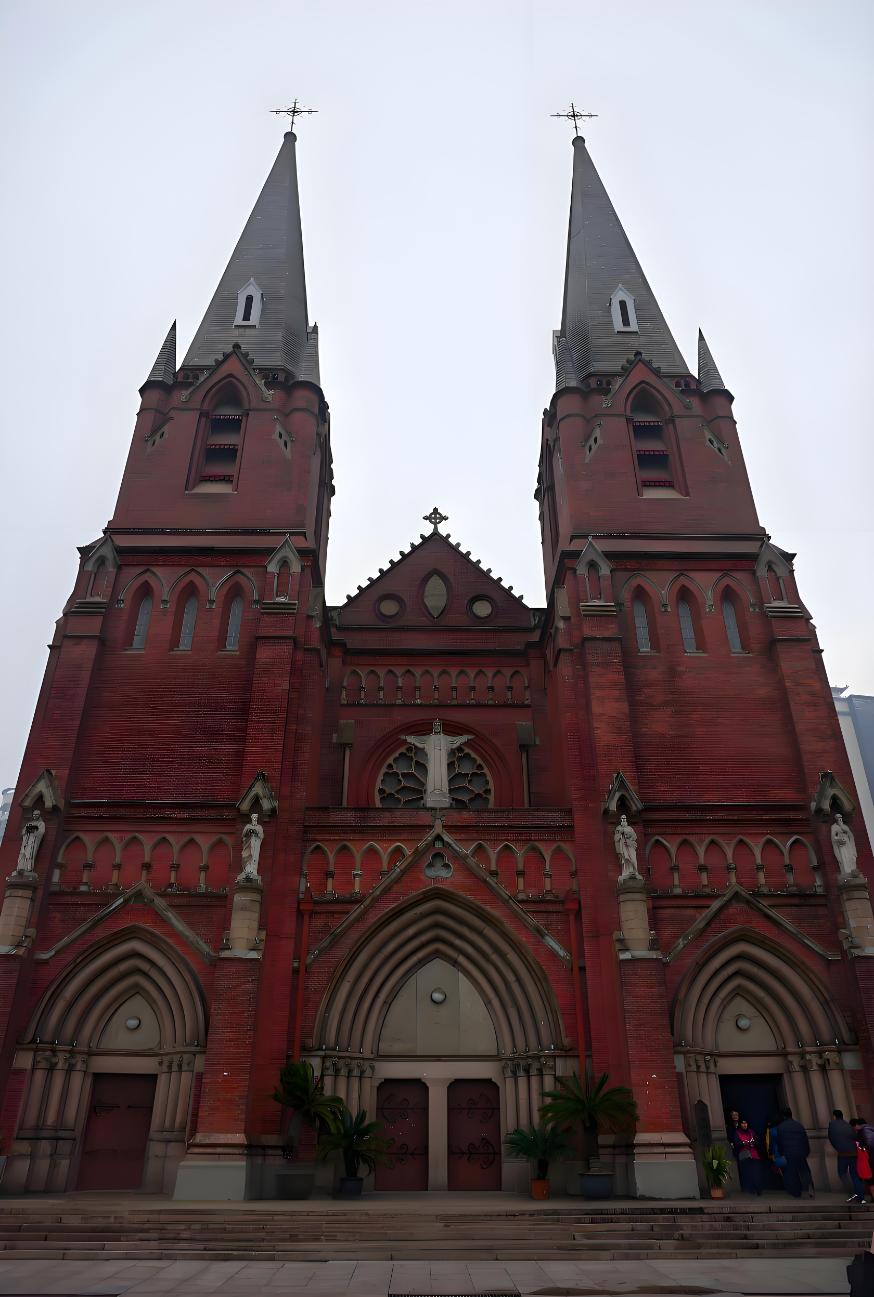
Amid the fast-paced energy of modern Shanghai, there lies a tranquil corner where time seems to slow — where Gothic spires reach skyward and stained-glass windows cast colorful reflections of faith and tradition. St. Ignatius Cathedral, commonly known as Xujiahui Catholic Church, stands as a beacon of spiritual grace, historical resilience, and cross-cultural beauty. For Western visitors, it offers not only a place of worship but also a moment of connection — a link between East and West, old and new, sacred and worldly.
🕍 A Glimpse into History
Built in 1906 by French Jesuit missionaries, St. Ignatius Cathedral was once the largest Catholic cathedral in the Far East. Designed in the Neo-Gothic style, it was a symbol of both religious outreach and European architectural influence during the colonial era. The church became the heart of Catholicism in Shanghai and remains so today.
Located in Xujiahui, a district historically rooted in Catholic missionary work, the church is surrounded by institutions founded by Jesuits — schools, libraries, and hospitals that helped shape the area’s intellectual and cultural legacy.
Though it suffered during turbulent times — including damage during the Cultural Revolution — the cathedral has since undergone careful restoration. Today, it stands renewed in both physical structure and spiritual significance.
🧱 Architectural Elegance & Interior Splendor
From the outside, St. Ignatius Cathedral impresses immediately with its twin 50-meter-tall spires, red brick façade, and intricate stone carvings. Visitors often compare it to cathedrals found in France or Germany, which gives a familiar sense of place to European tourists — yet in a distinctly Chinese setting.
Step inside, and you’ll be welcomed by a peaceful, awe-inspiring space. The vaulted ceilings, marble columns, and local touches on the altar and artwork create a sacred atmosphere that blends Western architecture with subtle Eastern influence.
One of the highlights is the series of stained-glass windows redesigned and restored by Chinese artist Wo Yue-Kee in the early 2000s. These windows incorporate both biblical scenes and Chinese artistic motifs, creating a dialogue between cultures that is unique and deeply moving.
“I’ve seen many churches in Europe, but this one felt special — it’s deeply spiritual and unmistakably Shanghai at the same time.”
— Laura S., visitor from Italy
✨ Cultural Significance and Local Integration
St. Ignatius is not just a relic of history — it remains an active place of worship, hosting daily Masses, including English-language services for the international community. During Christmas and Easter, the cathedral is filled with locals and expats alike, united by music, faith, and shared celebration.
The church also plays an educational and cultural role, often included in walking tours of Xujiahui and featured in Shanghai’s religious heritage maps. For travelers interested in the intersection of religion, colonial history, and urban development, this site offers profound insights.
📍 Location and Nearby Attractions
Conveniently located in the heart of Xujiahui, the cathedral is easily accessible by Metro Line 1 or Line 11 (Xujiahui Station). The area surrounding the church is filled with historic buildings, shopping malls, and cultural institutions, including:
Bibliotheca Zi-Ka-Wei (Xujiahui Library) – One of the oldest libraries in modern China
Shanghai Astronomical Observatory – Founded by Jesuits, reflecting their scientific contributions
Tushanwan Museum – A tribute to local Catholic orphanages and craft schools
This makes the visit not just spiritually fulfilling, but also culturally enriching.
🧭 Why Tourists Love It
Visiting St. Ignatius Cathedral offers a sense of familiarity through its architectural style, a deeper understanding of Shanghai’s colonial and religious history, a peaceful retreat from the bustling city, and a unique opportunity to see how Western faith has been adapted within an Eastern cultural setting.
A sense of familiarity in a foreign land, thanks to its architectural style
A deeper understanding of Shanghai’s colonial and religious history
A quiet spiritual retreat from the city’s urban buzz
A unique opportunity to witness how Western faith adapted to an Eastern setting
“As someone raised Catholic, I found comfort here. It was like rediscovering my roots — but through a new cultural lens.”
— Thomas M., tourist from Canada
📷 A Photographer’s Delight
Whether capturing the morning light pouring through stained glass, the towering spires against a blue sky, or local worshippers lighting candles, the cathedral offers countless moments of photographic beauty.
It’s especially popular with wedding photographers, travel bloggers, and architecture enthusiasts.
💬 Visitor Reviews
⭐ “A peaceful oasis.”
“This was one of my favorite stops in Shanghai. It felt calm and reflective, and I loved how the architecture brought a piece of Europe to China.”
— Olivia H., UK
⭐ “A surprise gem.”
“Didn’t expect to find such a beautiful cathedral in the middle of a busy shopping area. It’s well-preserved and truly spiritual.”
— Brian T., USA
⭐ “A cultural bridge.”
“The stained glass windows with Chinese patterns were incredible — a true example of East meeting West.”
— Isabelle R., France
📝 Travel Tips
Hours: Usually open to visitors from 9 AM – 5 PM; check Mass schedule before visiting.
Dress modestly: As it is an active place of worship.
Photos: Allowed, but please respect services and worshippers.
Language: English Mass available; signage often bilingual.
St. Ignatius Cathedral is more than a religious site — it is a living monument to cultural integration, resilience, and peace. For Western visitors, it offers a unique moment of reflection and a tangible link to Shanghai’s global past and present. Whether you’re spiritual or simply curious, this cathedral invites you to pause, look upward, and appreciate the quiet grandeur of faith across cultures.