
A Tower Steeped in Legend and Literature
Perched atop Snake Hill on the banks of the Yangtze River in Wuhan, Yellow Crane Tower (Huanghelou) is one of China’s most iconic architectural landmarks. With a history stretching back over 1,700 years, it stands not only as a monument of traditional Chinese architecture but also as a living tribute to classical poetry. The current reconstruction, completed in the 1980s, faithfully revives the spirit and grandeur of its predecessors, making it an essential destination for anyone seeking to immerse themselves in the artistic and cultural soul of China.
Yellow Crane Tower is one of the “Four Great Towers” of China, alongside Yueyang Tower, Penglai Pavilion, and Tengwang Pavilion. Its fame, however, is arguably the most enduring, thanks in large part to its immortalization by Tang dynasty poets such as Cui Hao and Li Bai. Their verses have been etched into the cultural memory of the Chinese-speaking world, making a visit here more than just sightseeing—it’s stepping into a page of living history.
Architectural Elegance with Symbolic Meaning
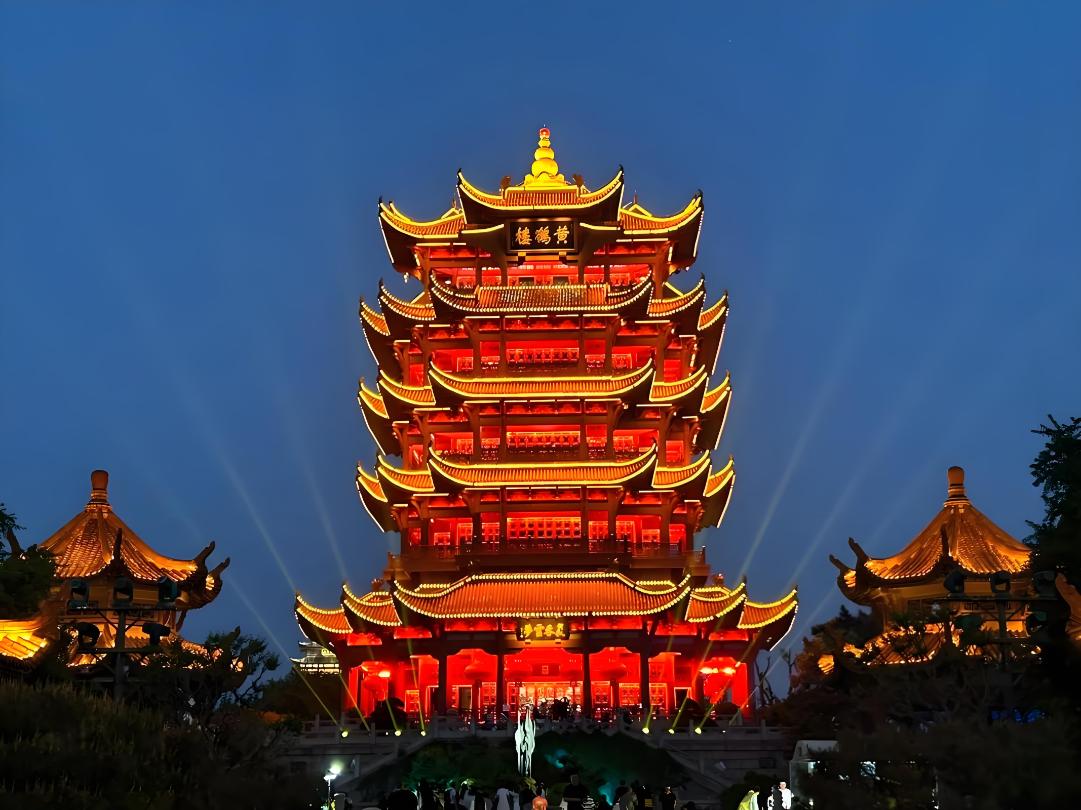
The tower’s architecture is instantly recognizable, with sweeping eaves, upturned corners, and golden glazed tiles that shimmer in the sunlight. Rising five stories high, it reaches a height of nearly 50 meters, designed to resemble a soaring crane—a symbol of transcendence and longevity in Chinese mythology.
Each floor of the tower offers intricately designed interiors, adorned with paintings, carved screens, and calligraphy inspired by the poems that made the tower famous. Visitors can walk through corridors lined with stone inscriptions and art installations that explore the tower’s history, legends, and role in literature. The elegance of the structure, combined with panoramic views of the surrounding city and river, makes the Yellow Crane Tower both a cultural and visual feast.
Panoramic Views from the Summit
Climbing to the top of Yellow Crane Tower is a highlight for many. The upper floors serve as a series of observation platforms offering sweeping views of the Yangtze River, Wuhan’s Three Towns (Wuchang, Hankou, and Hanyang), and the modern city skyline. This unique blend of ancient architecture overlooking a modern metropolis creates a striking contrast that photographers and urban explorers find particularly captivating.
Late afternoon and early evening visits are especially recommended. As the sun begins to set, the tower is bathed in golden light, and once darkness falls, a spectacular light show illuminates both the tower and surrounding park, enhancing its dreamlike appearance. This twilight transition, with glowing eaves against the night sky, evokes the romanticism often found in ancient poetry.
Cultural Immersion through Poetry and Storytelling
Yellow Crane Tower is inseparable from Chinese literary tradition. Cui Hao’s renowned poem begins with:
“Long ago one rode away on a yellow crane,
All that remains here is Yellow Crane Tower.”
These lines and others are displayed throughout the tower, often paired with artistic interpretations. For many visitors, reading these verses on-site, where they were inspired centuries ago, brings a deep sense of connection to Chinese cultural heritage.
Interactive exhibits help contextualize these stories, offering both English and Chinese explanations. Touchscreens, animations, and even guided VR experiences allow visitors to explore how the tower looked during different dynasties. It’s a rare opportunity to witness how literature and place have continuously influenced one another throughout history.
Seasonal Beauty and Ideal Timing
Although Yellow Crane Tower can be visited year-round, the most pleasant times are during spring and autumn. In spring, cherry blossoms bloom in nearby parks, softening the ancient stone walls and surrounding gardens with color and fragrance. Autumn brings cooler weather and vivid sunsets over the river, making it an especially atmospheric time to climb the tower.
Visiting during the evening hours has a unique charm. The tower’s lighting design enhances its silhouette against the Wuhan skyline, creating a stunning backdrop for photography. Nighttime strolls through the surrounding gardens, accompanied by traditional music performances or occasional poetry recitations, add an enchanting quality to the experience.
Highlights Around the Tower
Yellow Crane Tower is the centerpiece of a larger cultural park that includes several complementary attractions. Nearby is the ancient Qingchuan Pavilion and the Yangtze River Bridge, both easily accessible by foot and connected by leafy walkways and viewing decks. The park also features pavilions, bonsai gardens, and teahouses where guests can pause to absorb the tranquil surroundings.
For those looking to extend their cultural journey, the nearby Hubei Provincial Museum offers deeper insights into regional history, and the East Lake Scenic Area provides further opportunities for nature walks and boating.
What Visitors Love About Yellow Crane Tower
Guests from around the world often express surprise at how seamlessly history, poetry, and architecture merge here. Many note the emotional impact of standing in a place celebrated by poets over a thousand years ago, especially when reading English-translated verses inscribed alongside their Chinese originals.
Others highlight the photo opportunities—whether it’s capturing the elegant curves of the tower against a blue sky, or taking panoramic shots from the top overlooking the Yangtze. Couples and solo travelers alike enjoy dressing in traditional Hanfu, available for rent nearby, and taking photos around the tower, adding a layer of cultural immersion to their visit.
Visitors often mention that Yellow Crane Tower provides a different experience from many of China’s more famous landmarks: less crowded than the Great Wall or Forbidden City, yet deeply enriching in its literary and aesthetic appeal.
A Living Symbol of Wuhan
To understand Wuhan’s identity, visiting Yellow Crane Tower is essential. It serves not only as a landmark but also as a symbol of the city’s intellectual and artistic roots. Unlike many historical sites that remain frozen in time, the tower continues to evolve—hosting cultural events, seasonal light displays, and educational exhibitions that ensure it remains relevant and engaging to new generations.
For travelers seeking more than just scenery—those looking to understand the heart and soul of a place through its stories, legends, and timeless art—Yellow Crane Tower offers a deeply memorable experience. It’s a bridge between past and present, between poetry and cityscape, and between the real and the imagined.