

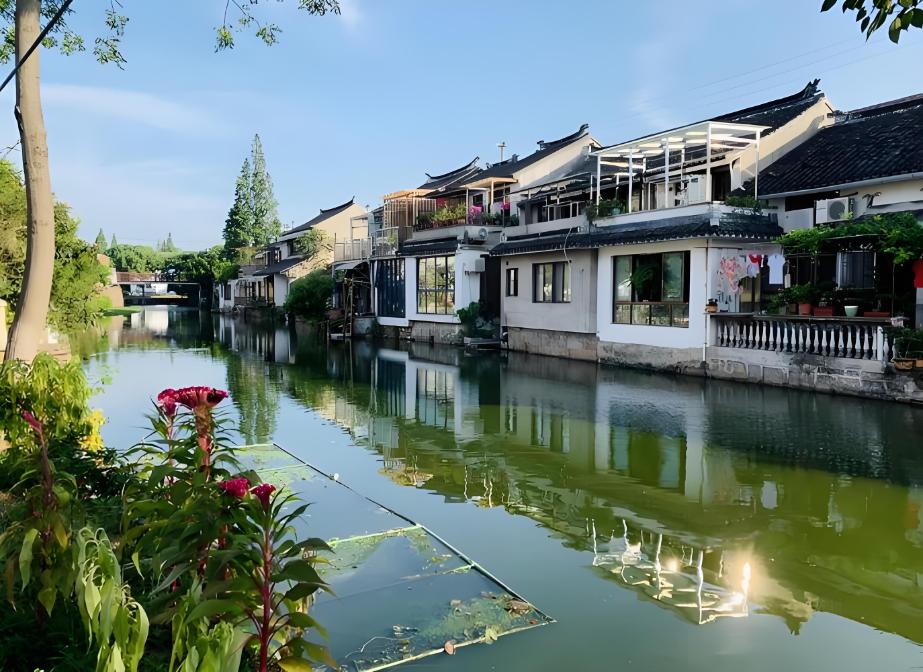
Timeless Scenes in a Quiet Corner of Jiangnan
Tongli, one of the most authentic ancient water towns in China, sits gently on the edge of Suzhou, crisscrossed by narrow canals and arched stone bridges. It is a place that doesn’t just display history—it lives in it. While some ancient towns resemble outdoor museums, Tongli feels deeply residential, with the rhythm of local life flowing as naturally as the water beneath its bridges.
Recognized as a UNESCO World Heritage Site for its exquisite Retreat and Reflection Garden, Tongli offers something deeper than architectural beauty. It is a peaceful yet vibrant town where old traditions are quietly preserved and the poetry of everyday life continues uninterrupted.
The Garden of Retreat and Reflection
The centerpiece of Tongli’s cultural legacy is the Retreat and Reflection Garden (Tuisiyuan), a small but masterfully designed private garden built during the Qing Dynasty. Unlike grand imperial gardens, this space was designed for personal contemplation and intellectual seclusion. The name itself—“retreat and reflection”—captures the spirit of quiet introspection that defines Tongli as a whole.
With its delicate pavilions, zigzag corridors, moon gates, and mirrored ponds, the garden creates a perfect balance of emptiness and fullness, sound and silence. The layout plays with space and perspective, guiding the eye to borrowed views and hidden corners. Though small in size, its beauty feels expansive—ideal for a morning walk or a moment of stillness.
In spring, the garden comes alive with blossoms and birdsong. In winter, its minimalism deepens in the crisp air. No matter the season, the space offers a refuge from modern distractions and a window into the refined aesthetic values of Chinese scholars and poets.
The Ritual of Walking Three Bridges
One of the most beloved traditions in Tongli is the practice of walking the Three Bridges: Taiping (Peace), Jili (Auspicious), and Changqing (Celebration). These arched stone spans, positioned where canals meet, form a triangle near the heart of town. Locals believe that walking over all three bridges in a single path brings peace, good fortune, and long life.
This ritual is deeply rooted in folk culture. Many locals still follow the tradition during weddings, birthdays, and festivals. Visitors are warmly encouraged to join—not just as an act of sightseeing, but as a way to take part in something meaningful. Even if you come alone or without ceremony, walking the Three Bridges connects you to centuries of shared hope and quiet prayer.
Beyond their symbolic value, the bridges themselves are graceful examples of Ming and Qing stonework. They are best appreciated in the early morning or late afternoon, when their shadows fall over the water and local residents bike or walk across them without hurry.
Before the Town Wakes Up
There’s a beautiful secret to discovering the soul of Tongli: arrive before 7 a.m. In the hush of early morning, the town is free to enter, and free of crowds. Narrow alleyways echo only with the sounds of sweeping brooms and sparrows. Locals buy breakfast from steaming street stalls. The canals reflect an unbroken sky.
During these early hours, Tongli is entirely itself. There is no filter of tourism, no performance of tradition—just people living as they always have. You might see a grandmother rinsing vegetables at the canal’s edge, or hear the clack of Mahjong tiles inside a courtyard. It is a rare opportunity to witness not just heritage, but continuity.
Photographers, writers, and quiet wanderers often find this time the most memorable. Without the distraction of groups and noise, the architectural lines, water textures, and lived-in beauty of Tongli shine with subtle brilliance.
Canals and Wooden Boats
Much like Venice, Tongli is built on water. Fifteen small rivers divide the town into seven islands, connected by over forty bridges. Life has long revolved around these waterways, and the best way to experience them is by boat.
Gliding silently in a wooden gondola beneath stone archways, you pass beneath the eaves of homes that lean slightly toward the water—many over 300 years old. Along the banks, flowering plants spill from clay pots. In some sections, the canals narrow until they feel like corridors between timeworn walls.
Some boatmen still sing traditional folk songs in the Wu dialect as they row, their voices echoing through the stone passages. Others offer quiet passage and invite you to listen instead to the rhythm of oars. Whether you ride at noon under the sun or at dusk under lantern light, the canal journey adds a meditative layer to your visit.
Local Life and Simple Pleasures
Tongli’s charm is as much about its daily life as its history. The town’s narrow lanes are filled with small shops, teahouses, noodle stalls, and family-run inns. Elderly residents sit on wooden stools, chatting in the dialect of Suzhou. Laundry flutters between stone houses. Schoolchildren play beneath ancient ginkgo trees.
One of the joys of Tongli is stopping for a bowl of Tongli-style noodles, served in a rich soy broth with slices of pork and bamboo shoots. Another is sitting by the water with a cup of Longjing tea, watching the town drift by. Local snacks such as dried river fish, osmanthus cakes, and steamed rice dumplings add texture to the experience—not just flavor, but connection to regional taste.
Handicraft shops line some of the busier streets, where you can find everything from embroidered silk fans to hand-cut paper art. What makes shopping here special is the authenticity. Many goods are made right in town, by people whose families have worked in the same trade for generations.
Folk Culture and Spiritual Traces
Tongli’s cultural landscape is not limited to architecture and cuisine. The town preserves folk customs that stretch back centuries, especially in its temples and ancestral halls.
Chongben Hall and Jiayin Hall are two notable examples of traditional ancestral homes, featuring intricate woodwork, family relics, and symbolic ornamentation. They reveal the importance of family lineage, virtue, and harmony in Jiangnan society.
Buddhist and Taoist temples still operate in quiet corners of town. During festival periods, these spiritual centers become vibrant with rituals, red lanterns, and incense smoke. But even outside of holidays, they offer tranquil spots to pause, reflect, or simply observe local devotion.
What Visitors Often Say
Those who take time to explore Tongli often leave feeling emotionally touched. Many note the town’s gentleness—the way life here moves slowly and honestly. It’s a place that invites walking without purpose, eating without schedule, and observing without interruption.
Unlike more commercialized destinations, Tongli maintains a balance between welcoming outsiders and preserving its inner world. The hospitality is warm, but not performative. You’re a guest, not a customer.
Visitors frequently speak of the town as “poetic,” “quietly powerful,” and “unexpectedly moving.” The experience is not one of spectacle, but of discovery—layer by layer, step by step.
Getting There and Making the Most of It
Tongli is conveniently accessible from Suzhou via metro line 4, with a dedicated Tongli stop. From the station, a short shuttle or bike ride leads to the old town. Many travelers also choose to visit as a day trip from Shanghai or Hangzhou.
To truly appreciate the town, however, consider staying overnight. Local guesthouses—some set in historic homes—offer a deeper immersion, especially after sunset when the lanterns glow and the streets quiet down.
Even one full day in Tongli can feel like a step outside of time. But those who stay longer often find themselves reluctant to leave—not because of what there is to see, but because of how it feels to simply be.