
Historical and Cultural Background
Dunhuang, located at the crossroads of the ancient Silk Road, is renowned for its rich cultural heritage and diverse culinary traditions. Among its most distinctive offerings is the Western Region barbecue style, deeply influenced by the ethnic groups and trade routes that have shaped this region for centuries. The barbecue culture here reflects a harmonious blend of Uyghur, Kazakh, and other Central Asian culinary influences, offering a delicious taste of the Silk Road’s legacy.
At the heart of this tradition is the use of red willow charcoal, known locally as “hongliu,” which has been used for generations to grill meats. This charcoal, sourced from local red willow trees, burns intensely and imparts a distinctive smoky aroma that perfectly complements the spices and natural flavors of the meat. Alongside this, the “Nang Keng” or clay oven is a traditional tool used to cook lamb racks slowly, creating tender, juicy meat infused with smoky and spicy aromas.
Distinctive Features and Highlights
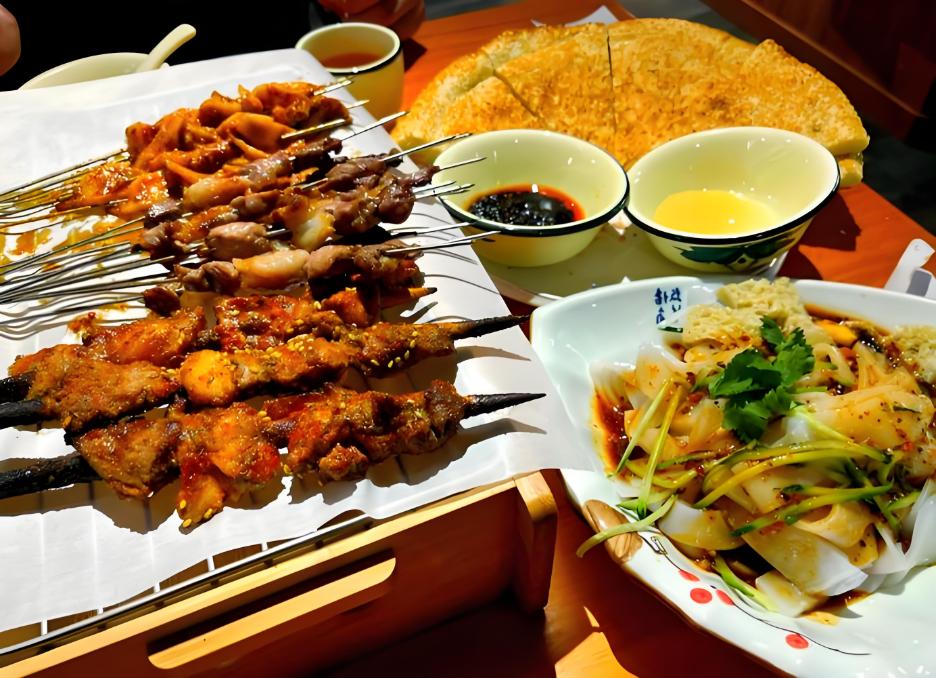
One of the most iconic elements of Dunhuang’s Western Region barbecue is the red willow grilled meat. Skewers of lamb, beef, or chicken are marinated with a blend of cumin, chili, garlic, and other spices unique to the region. These are then grilled over glowing red willow charcoal, allowing the spices to meld into the succulent meat while adding a delicious smoky edge.
Another highlight is the “Nang Keng” baked lamb racks. These are prepared by marinating the lamb with a mixture of local spices and herbs, then slow-cooked in a traditional clay oven buried in the ground. This technique locks in the juices and infuses the meat with complex flavors that are tender and rich.
Dunhuang’s barbecue experience is not complete without pairing these flavorful dishes with locally brewed Xinjiang beer. The beer’s crisp and refreshing qualities balance the bold spices and smoky meats perfectly, creating a harmonious dining experience.
Experience and Activities
Visitors to Dunhuang have the opportunity to immerse themselves in the vibrant street food scene, where the sizzling sounds and enticing aromas of barbecue fill the evening air. Night markets and open-air stalls invite guests to watch the grilling process up close, where skilled chefs tend to their skewers over the glowing red coals.
Many restaurants offer outdoor seating, allowing diners to enjoy their meals beneath the stars while soaking in the lively atmosphere. For those interested in deeper cultural engagement, some tours provide visits to local farms and traditional kitchens, where visitors can witness the preparation of the meat and even try their hand at seasoning and grilling.
Adventurous food lovers may also explore the diversity of the spices used in the marinade and learn how these seasonings have been passed down through generations, carrying the legacy of the Silk Road in each bite.
Attractions and Appeal
What makes Dunhuang’s Western Region barbecue particularly appealing is its authenticity and the sensory richness of the experience. The combination of red willow charcoal’s smoky aroma, the bold blend of spices, and the succulent texture of the grilled meats offers a feast for the senses.
The communal style of eating, often involving sharing various skewers and dishes, fosters a sense of connection and conviviality. This social aspect makes it an ideal culinary experience for groups or individuals eager to savor local traditions in a relaxed and friendly setting.
The integration of locally brewed beer adds a refreshing contrast, making the meal both satisfying and balanced. The affordability and accessibility of these barbecue delights in bustling market settings ensure that everyone can enjoy a taste of Dunhuang’s vibrant food culture.
Visitor Impressions
Travelers consistently praise Dunhuang’s Western Region barbecue as one of the most memorable culinary highlights of their trip. Many note the incredible flavor depth achieved through the use of red willow charcoal and the skillful marinating techniques. The tenderness of the lamb and the smoky finish often receive particular acclaim.
Visitors also appreciate the opportunity to experience the food in lively, authentic settings, from night markets buzzing with local life to cozy outdoor dining areas filled with laughter and conversation. The friendly vendors and chefs often engage with guests, sharing stories about the dishes and their preparation, which enhances the overall experience.
Many guests find pairing the barbecue with Xinjiang beer to be the perfect complement, describing the combination as refreshing and satisfying, especially after a day of exploring the desert city. The rich cultural context surrounding the food, combined with the unique flavors, leaves a lasting impression.
For those seeking to explore the flavors of China’s Silk Road heritage, Dunhuang’s Western Region barbecue offers a mouthwatering journey into a culinary tradition that is as vibrant and captivating as the ancient city itself.