

Small in Size, Grand in Spirit
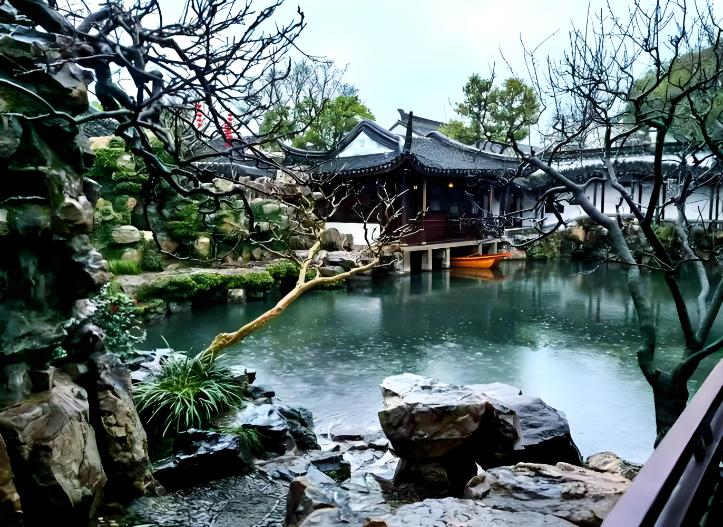
Among the many celebrated classical gardens of Suzhou, the Master of the Nets Garden stands out not through scale, but through perfection in miniature. Often described as the most refined and compact of Suzhou’s World Heritage gardens, it offers a distilled experience of Chinese aesthetic principles—where nothing is accidental, and everything is meaningful.
Originally designed during the Southern Song Dynasty and later restored in the Qing period, the garden reflects the ideals of a scholar’s retreat. Its name, inspired by a humble fisherman in ancient poetry who sought peace in simplicity, captures the atmosphere perfectly. Here, stone, water, architecture, and air are composed with such balance that the garden feels far larger than its physical boundaries suggest.
Poetry in Space and Design
Walking into the Master of the Nets Garden is like stepping into a painting brought to life. Despite being the smallest of Suzhou’s classical gardens, every corner reveals intricate design choices that guide the eye and calm the mind. The layout seamlessly combines residential quarters with garden scenery, offering a vision of elegant living merged with natural beauty.
The central pond acts as a quiet stage around which everything else revolves. Reflections of pavilions shimmer across its surface during the day, while moonlight dances gently across the water at night. The sense of intimacy is immediate—nothing feels crowded, and yet there is an endless variety of views.
Curved corridors lead to small courtyards. Hollowed stone windows offer glimpses of distant rockeries or swaying bamboo. Latticed windows frame just one tree or a corner of sky. This layered composition is not just artistic, but philosophical—encouraging the visitor to find richness in quiet moments.
A Night Like No Other
While the daytime experience offers serenity and elegance, the Master of the Nets Garden is one of the few in China that invites visitors to step into its magic after sunset. Its evening program, known simply as the “Night Tour,” is a sensory journey unlike anything else in Suzhou.
As twilight settles, the garden transforms. Soft lanterns glow along winding paths, casting golden light on ancient walls and lily-covered ponds. The hush of night deepens the sense of timelessness, and subtle lighting reveals textures and shadows that go unnoticed during the day.
Within this dreamlike setting, live performances of traditional Kunqu Opera take place in different courtyards and pavilions. Recognized by UNESCO as a masterpiece of oral and intangible heritage, Kunqu is among China’s oldest and most graceful forms of theater. Visitors may encounter a solo performance accompanied by flute, or a brief dramatic scene staged beneath the curved roof of a pavilion. There’s no formal audience seating—guests simply drift through the garden, discovering each performance as if by chance.
The night tour doesn’t feel like a show—it feels like walking through living history, where music and architecture breathe together under the stars.
The Gate That Tells a Story
At the entrance to the garden stands one of its most iconic and little-known features: the brick-carved gate tower known as “Zao Yao Gao Xiang” (藻耀高翔). This structure, often called the finest decorative gate in Jiangnan, is a masterpiece of Qing Dynasty brick carving. Rich with layers of symbolic meaning, it celebrates prosperity, honor, and scholarly ambition.
The craftsmanship here is stunning—dragons, phoenixes, clouds, and auspicious motifs are all sculpted in high relief, using nothing but grey bricks. It’s a gateway that doesn’t just invite you into a garden, but into an entire worldview steeped in metaphor and beauty.
For those who appreciate architecture and historical ornamentation, this gate alone is worth a visit. It reflects the artistry that permeates the entire space, where even the smallest structural detail carries elegance and intention.
A Garden of Ideas, Not Just Flowers
What truly distinguishes the Master of the Nets Garden is how it embodies the spirit of classical Chinese literati culture. This is not a place built for royalty or ceremony, but a haven designed for reflection, creativity, and retreat from the noise of daily life.
Many of the pavilions are named after poetic concepts—the Pavilion of the Arriving Moon and the Watching Pines, the Hall of Ten Thousand Volumes, the Pavillion for Washing the Ribbon. These names don’t describe function but evoke mood and philosophy. They encourage a slower pace, one where you listen to the wind in the bamboo, trace the ripple of water, and wonder what stories the stones might tell.
Even the asymmetry in layout is intentional. Unlike Western gardens built on symmetry and linearity, here the goal is to recreate the spirit of natural landscapes within limited space. The rockeries resemble distant mountains, the trees seem to lean as if caught mid-bow, and every change in elevation feels like a miniature expedition through imagined wilderness.
Visitors’ Impressions
Guests often describe the Master of the Nets Garden as the most emotionally resonant of all Suzhou’s classical gardens. It’s not overwhelming or crowded; instead, it feels personal—like a garden made just for the moment you step into it.
Many speak of a sense of peaceful intimacy, where every glance reveals something new. Artists and photographers appreciate how the space constantly rearranges itself visually, offering endless frames and compositions. Those with an interest in history and culture find themselves moved by the subtle storytelling embedded in every name, curve, and corridor.
The night tour, in particular, has left lasting impressions. Visitors recall how the music of Kunqu drifting through moonlit pathways made them feel suspended in time—part of a dream that blurs the line between past and present.
Best Time to Visit
The Master of the Nets Garden can be enjoyed year-round, with each season offering its own quiet gifts. Spring brings blossoms that contrast with grey stone. Summer provides lush green backdrops and the flicker of fish under lotus leaves. Autumn adds crispness to the air and golden tones to the trees. Winter, bare and hushed, highlights the bones of the garden and its minimalist strength.
Morning visits offer peace and clarity, especially for those interested in sketching, photography, or simply absorbing the space without interruption. The night tour is available on select evenings, and advance booking is required due to its popularity and limited capacity.
Because the garden is compact, an hour is generally enough for a complete visit, though many choose to linger—true to its name—and return more than once.
An Experience That Lives On
The Master of the Nets Garden does not announce itself with grandeur. It draws you in gently, through quiet elegance and thoughtful design. It asks nothing of its visitors except to notice—to pay attention to the balance of elements, to the poetry in space, and to the timeless rhythm of nature and culture intertwined.
In a world often consumed by speed and spectacle, this garden offers a different kind of richness: one born of quiet detail, layered beauty, and profound calm. Those who enter with open eyes and a quiet mind often leave with a memory far larger than the space itself—a lasting impression that continues to unfold long after the visit ends.