

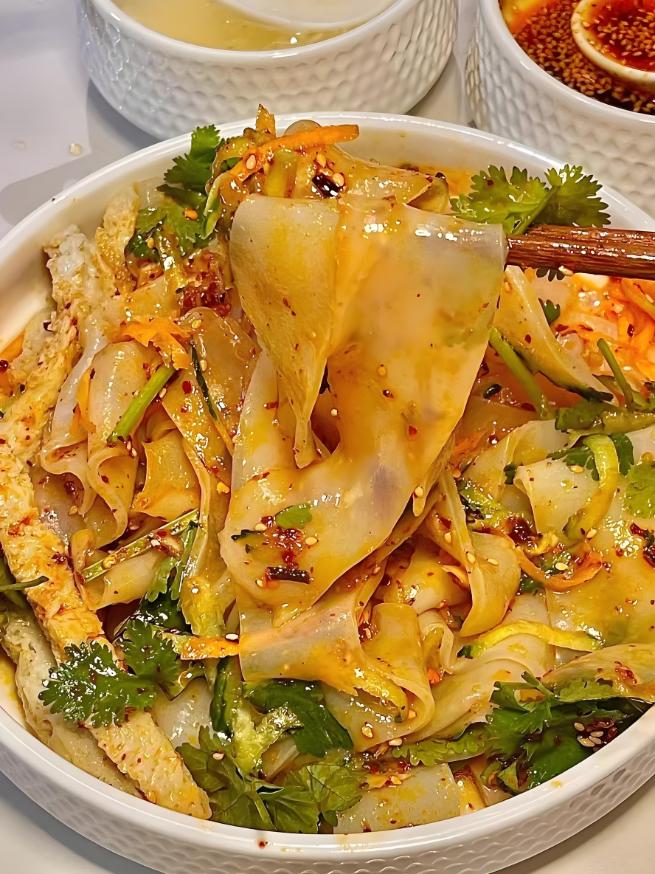
A Taste of Xi’an’s Everyday Cuisine
In a city famous for its imperial relics and ancient architecture, it’s easy to overlook the simple street dishes that define daily life in Xi’an. One such treasure is Liangpi—a refreshing cold noodle dish beloved by locals for generations and increasingly appreciated by curious travelers looking to experience authentic Shaanxi flavor. Despite its humble appearance, Liangpi tells a story that stretches back over 2,000 years and speaks to the region’s mastery of bold, balanced street food.
What Is Liangpi?
Liangpi, which translates to “cold skin noodles,” is a dish typically made from wheat or rice flour. It consists of broad, soft noodles served cold, usually accompanied by shredded cucumber, wheat gluten (mianjin), vinegar, chili oil, garlic water, and sesame paste. The result is a harmonious blend of textures and flavors—cool and spicy, soft and crunchy, tangy and savory.
Though recipes and toppings may vary slightly across different vendors, the soul of Liangpi lies in its refreshing, energizing character. It is a quintessential summer dish but is available year-round in Xi’an, both as a street snack and as a quick, flavorful meal.
Historical Origins in the Heart of Shaanxi
The origins of Liangpi are rooted in Shaanxi’s agrarian culture. Some historians trace the dish back to the Qin or Han dynasty, when farmers and workers needed a nutritious, cooling dish to get through hot summers. Over centuries, Liangpi evolved from a regional favorite into a culinary icon—simple, affordable, and deeply satisfying.
Unlike many rich and complex dishes associated with Xi’an, Liangpi is a celebration of minimalism. It reflects the ancient wisdom of turning everyday ingredients into something both delicious and meaningful. This authenticity is part of what makes it so appealing to travelers who want to go beyond the imperial glamour and experience what locals actually eat.
Regional Variations and Modern Interpretations
There are several types of Liangpi you’ll encounter in Xi’an:
Mianpi (面皮) – Made from wheat flour, these noodles are slightly firmer and chewier.
Rice Liangpi (米皮) – Made from rice flour, these tend to be silkier and softer.
Hanzhong Liangpi – A spicier version with more chili oil and garlic.
Shanxi Gan Mianpi – Served with warm gluten puffs and a sesame-heavy sauce.
Most eateries and stalls allow you to customize the spice level and add vinegar or garlic water to taste. The layering of flavors is what makes Liangpi special—every bite delivers a slightly different combination, from cooling cucumber to spicy oil, from chewy noodles to tangy wheat gluten.
Where to Try Liangpi in Xi’an
Liangpi is available all over the city, but a few spots stand out for quality, consistency, and popularity among both locals and travelers. One of the most famous is:
Weijia Liangpi (魏家凉皮) – A local chain with many branches in Xi’an, offering clean, fast, and flavorful versions of Liangpi alongside other Shaanxi snacks. It’s a great introduction for first-time visitors and offers an authentic yet approachable experience.
You can also find excellent Liangpi in the Muslim Quarter, on Beiyuanmen Street, or in Yongxingfang—a street food area that celebrates traditional Shaanxi cooking.
Liangpi as a Cultural Experience
Eating Liangpi is not just about cooling down on a hot day; it’s a cultural ritual. It’s often eaten as a mid-day snack or a light lunch, and it’s incredibly popular among students and workers. The dish is also deeply tied to local identity. Ask any Xi’an native, and they’ll likely have a favorite stall or family recipe.
From a cultural perspective, Liangpi embodies the principles of balance in Chinese cuisine. It’s cooling yet spicy, soft yet crunchy, nourishing yet light. This duality reflects the philosophical concepts that underlie much of Chinese food culture—yin and yang, contrast and harmony.
What Visitors Say About Liangpi
Travelers are often pleasantly surprised by Liangpi. Some arrive in Xi’an expecting only hearty meat dishes like Roujiamo or lamb skewers and discover Liangpi as a refreshing contrast. Comments often highlight its unique texture, bold flavor, and perfect balance between spice and coolness.
One visitor wrote, “I never imagined cold noodles could taste so vibrant. The sesame, garlic, and chili oil combination was completely new to me, and I loved every bite.” Another commented, “After a long walk along the city wall, a bowl of Liangpi was the perfect way to cool off. I ended up eating it every day I was in Xi’an.”
The simplicity of the dish makes it approachable, while the intensity of flavor makes it unforgettable. Many travelers leave Xi’an trying to recreate Liangpi at home—or at least longing for one more bowl.
Pairing Liangpi with Other Local Delights
Though it stands strong on its own, Liangpi is often enjoyed with other local dishes. A classic pairing is with a warm Roujiamo (meat bun) and a cup of sour plum juice (suanmeitang) or mung bean tea. This combination offers a full range of temperature, texture, and flavor contrasts—cold noodles, hot bread, cool drink—which makes for a deeply satisfying, balanced street food meal.
A Must-Try in Any Xi’an Food Journey
For anyone visiting Xi’an with a desire to connect with local culture through food, Liangpi is essential. It represents a side of the city not found in palaces or pagodas, but in alleyways and market stalls, in the hands of everyday people preparing generations-old recipes with pride.
Whether you’re on a gourmet food tour or just looking for something light between sightseeing stops, Liangpi offers a true taste of Xi’an’s soul. Don’t let its humble appearance fool you—it’s one of the most distinctive, crave-worthy bites you’ll find in China.