

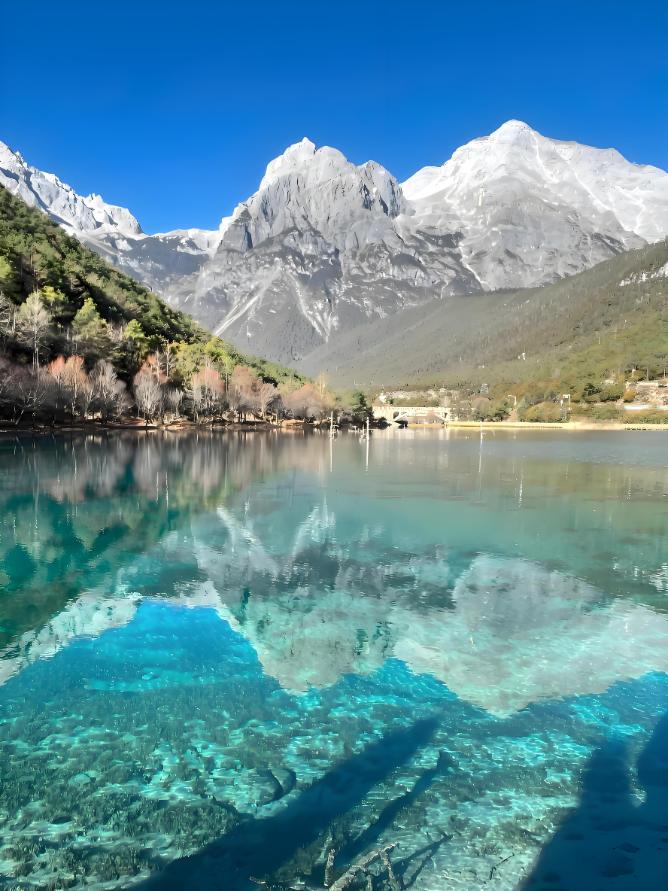
Rising dramatically from the Yunnan plateau, Jade Dragon Snow Mountain is one of China’s most iconic natural landmarks. Its 13 glacier-capped peaks stretch along the horizon like a sleeping dragon cloaked in snow, offering a visual spectacle and a cultural heartbeat for the Naxi people who have long regarded it as sacred. Whether you’re drawn by alpine adventure, ethereal landscapes, or a deeper understanding of local traditions, this mountain delivers an unforgettable experience.
Cultural Significance and Spiritual Identity
For centuries, Jade Dragon Snow Mountain has held sacred status in Naxi mythology. Believed to be the embodiment of Sanduo, the protective war god of the Naxi people, the mountain is more than just a backdrop to Lijiang—it is part of its spiritual geography. Local rituals still pay homage to the peaks, and many Naxi elders refer to the mountain with reverence, as though speaking of a living guardian.
The mountain also sits at the cultural crossroads between Han, Tibetan, and Naxi civilizations. This fusion is evident not only in the nearby architecture and folk traditions, but also in the daily rituals of people living in its foothills. To explore this landscape is to witness the living continuity between land and culture.
Glacier Park: Touching the Sky
One of the most awe-inspiring experiences on Jade Dragon Snow Mountain is visiting Glacier Park via the large cable car, which whisks visitors from 3,356 meters to a dizzying 4,506 meters above sea level. The journey itself is breathtaking—literally and figuratively—as thin air and panoramic views combine for an unforgettable ascent.
At the top, wooden walkways allow for safe exploration amid icy cliffs and blue crevasses. On a clear day, the horizon unfolds into an endless sea of clouds, ridgelines, and pristine snow. While oxygen cans are available and often recommended due to altitude, many visitors are surprised by how manageable the experience is with short rest breaks and layered clothing.
It’s not uncommon to see travelers pause in silence at the viewing platforms, humbled by the grandeur. “It felt like we were walking through the sky,” one visitor shared. “The world below disappeared. It was just wind, ice, and this overwhelming sense of stillness.”
Blue Moon Valley: Where Water Becomes Light
Just below the mountain lies Blue Moon Valley, a series of turquoise lakes fed by snowmelt and mineral springs. The color of the water is often described as “Tiffany blue,” and the scenery looks almost surreal—especially when mist drifts in, adding a cinematic glow to the valley’s white limestone terraces and wooden bridges.
The valley is crisscrossed with walking paths, making it easy to explore at a gentle pace. The sound of cascading water is constant, and on sunny days, the reflection of the mountain in the lake feels like something out of a dream. Photographers flock to this spot at all hours, but particularly in the early morning or late afternoon when the light is soft and the crowds are sparse.
Many visitors describe Blue Moon Valley as one of the most unexpectedly magical places they’ve seen in China. “It was like Iceland meets Tibet meets a fairytale,” noted a guest after a summer visit.
Impression Lijiang: A Stage Beneath the Sky
For those interested in cultural immersion, Impression Lijiang is a must-see. Directed by Zhang Yimou, the acclaimed filmmaker behind the Beijing Olympics opening ceremony, this open-air performance takes place at an altitude of over 3,000 meters with the snow-covered peaks as a natural backdrop.
What makes the performance remarkable is not just its artistic grandeur, but its emotional weight. Over 500 local performers—farmers, herders, and villagers—bring to life the legends, weddings, rituals, and songs of the region’s diverse ethnic groups. The choreography is both grand and intimate, using the earth itself as a stage.
The show doesn’t rely on special effects; its power comes from authenticity, scale, and the resonance of lived experience. One audience member described it as “not just a performance, but a ceremony—a call to remember where we come from.”
Off-the-Beaten-Path: Yak Meadow and Horseback Rides
While the glacier and valley attract large crowds, there are quieter corners of Jade Dragon Snow Mountain where nature remains undisturbed and deeply personal. Yak Meadow (Maoniuping) is one such place. Especially vibrant in summer, its slopes are blanketed with wildflowers, and herds of yaks graze freely under wide alpine skies.
It’s an ideal spot for gentle hiking, with fewer visitors and longer, more meditative trails. The meadows offer expansive views of the mountain range, and on clear days, you can see farmers tending to terraced fields in the distance—just as their ancestors did for generations.
For those seeking a different pace, horseback riding at the base of the mountain offers a unique perspective. Guided by local Naxi horsemen, these rides take you through pine forests, across bubbling streams, and up hills that open to scenic views. It’s a chance to connect with both land and lifestyle.
What Visitors Are Saying
Travelers frequently highlight the diversity of experiences on Jade Dragon Snow Mountain. “We started with alpine snow and ended in an aquamarine valley—it felt like visiting multiple countries in one day,” one guest commented. Others point to the sheer accessibility of natural wonders that elsewhere might take days to reach. “The infrastructure here is fantastic—cable cars, eco-shuttles, walking trails—but it still feels wild and untouched in many parts.”
Cultural explorers praise the mountain’s spiritual atmosphere and meaningful interactions with locals, especially in the more remote areas. “It wasn’t just about scenery,” another traveler reflected. “It was about stories, rituals, and this powerful sense of belonging—to land, to time, to something older than us all.”
Why Jade Dragon Snow Mountain Is Unmissable
Whether your passion lies in mountaintop adventures, immersive performances, sacred art, or quiet contemplation in flower-filled meadows, Jade Dragon Snow Mountain has something to offer. It’s not just a place to visit—it’s a landscape that reveals itself in layers, inviting you to explore, reflect, and return changed.
From the breath-stealing heights of Glacier Park to the silent ripples of Blue Moon Valley, from the resonant voices of Impression Lijiang to the quiet grazing of yaks under the summer sun, every step on this mountain is a story waiting to be experienced.