

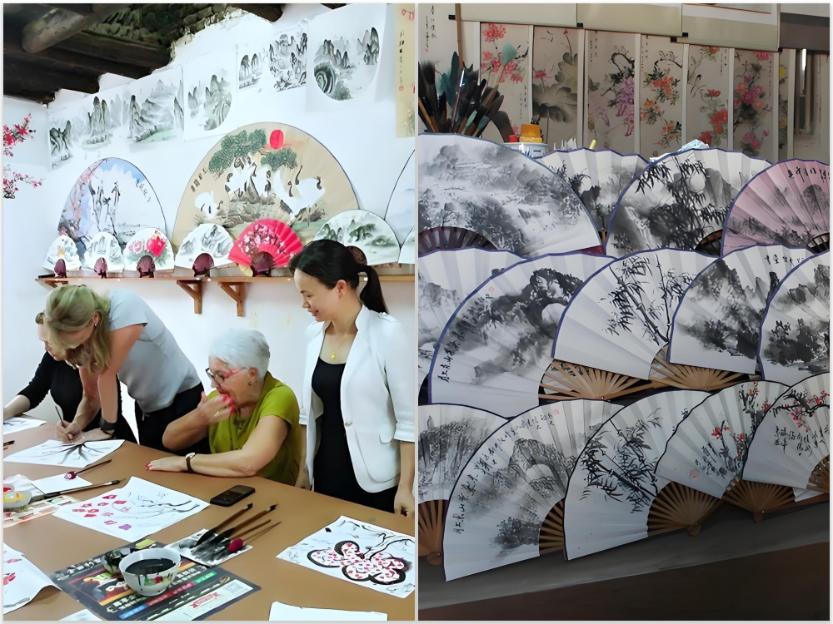
Nestled on the eastern banks of the Li River in Yangshuo County, Guangxi, Fuli Town is often described as the “Cradle of Chinese Painted Fans.” With a history that spans over a thousand years, Fuli is one of the few remaining towns in China where traditional painted fans are still entirely handmade using time-honored techniques passed down through generations. Known locally and abroad as China’s No.1 Painted Fan Town, Fuli is a place where ancient craftsmanship, natural beauty, and living heritage converge.
Why Visit Fuli Town?
Fuli is a rare gem in today’s fast-paced world. Here, time slows down, and the brushstrokes on silk or paper fans speak volumes about culture, patience, and artistry. As part of the broader Yangshuo tourist region, Fuli offers not only scenic landscapes — with limestone karsts, rice paddies, and river views — but also a deep cultural experience that travelers often miss in larger cities.
Whether you’re an art lover, cultural explorer, or simply seeking a unique souvenir, Fuli’s fan-making tradition offers something unforgettable.
Top Painted Fan Workshops in Fuli Town
1. Mo’s Fan Art Studio (莫氏扇艺坊)
Master Artisan: Mo Yunzhong, Intangible Cultural Heritage bearer
One of the most renowned painted fan studios in Fuli is Mo’s Fan Art Studio, founded and operated by master craftsman Mo Yunzhong, who has over 30 years of experience in fan-making. He is officially recognized as a local guardian of intangible cultural heritage.
Features:
Purely Handmade: Each fan is crafted through an elaborate process involving 72 individual steps, from preparing the bamboo ribs to painting and assembly. A single fan can take 2–3 days to complete.
Original Paintings: Mo’s studio focuses on one-of-a-kind designs, with hand-painted motifs ranging from Li River landscapes to traditional flowers, birds, and fish. No two fans are exactly alike.
Highlights:
International Recognition: Mo has represented Fuli at international events, including the China-ASEAN Expo, and has welcomed ambassadors and foreign dignitaries to his workshop.
Tourist Participation: The studio offers fan-painting experiences where visitors can try their hand at traditional brushwork, guided by skilled artists.
If you’re interested in learning more deeply about Chinese painting and fan culture, this studio provides an intimate, educational, and hands-on experience.
2. Peng’s Fan Workshop (彭氏画扇工艺厂)
Family Legacy and Modern Innovation
Located near Mo’s studio, Peng’s Fan Workshop is another major player in the Fuli painted fan scene. Known for its diverse fan styles and international clientele, Peng’s workshop combines traditional methods with modern creativity.
Features:
Export Quality: Fans from Peng’s studio are exported worldwide, including to Japan, the United States, and South Korea.
Diverse Designs: The studio balances classical Chinese aesthetics (like ink wash mountains and calligraphy) with contemporary artistic themes, making the fans appealing to a global audience.
Highlights:
Non-Heritage Classroom (非遗学堂): A major draw for tourists, especially families, is the interactive workshop experience offered here. Known as the “Intangible Cultural Heritage Classroom,” it allows guests to create and decorate their own fans to take home.
Peng’s studio is ideal for visitors who want to explore the evolving face of Chinese folk art and support family-run heritage businesses.
3. Fuli Fan Street (岭背街 – “Painted Fan Street”)
Historic Marketplace and Cultural Showcase
At the heart of Fuli lies Fan Street, also known as Lingbei Street — a lively stretch that was once home to over 100 fan-making workshops. Although the number has declined in recent years, many small, family-run studios still operate along this road, continuing the craft in humble yet passionate ways.
Features:
Live Demonstrations: Walking along the street, visitors can watch artisans craft fans in real-time, from bamboo splitting to painting and mounting.
Fan Varieties: The selection here is vast — from miniature souvenir fans (around 30 cm) to giant display fans that can be over 2 meters wide.
Affordable and Authentic: Many of these shops offer affordable fans with excellent craftsmanship, often customizable on the spot.
Highlights:
Cultural Stroll: This street offers the best immersion into daily artisan life in Fuli. It’s more than a shopping experience — it’s a chance to interact directly with artists and learn the meaning behind their designs.
The Cultural Significance of Painted Fans
In Chinese history, fans have been more than tools for cooling — they are canvases for poetry, philosophy, and art. They’ve appeared in the hands of scholars, dancers, warriors, and nobles, and are imbued with deep cultural symbolism.
In Fuli, this tradition is kept alive with skill and soul. Many fans carry calligraphy, folk tales, or nature scenes, serving both decorative and spiritual purposes.
Fans are typically made with:
Bamboo ribs, locally sourced from Guangxi’s forests.
Silk or rice paper surfaces, known for their absorbent and soft texture.
Water-based ink and mineral pigments, painted using traditional Chinese brushes.
Each fan tells a story — of a place, a season, a dream — and buying one means bringing home a piece of living Chinese heritage.
Tips for Visitors
Getting There: Fuli Town is about 8 km (5 miles) from Yangshuo County and is easily reachable by bicycle, taxi, or local minibus.
Best Time to Visit: Morning visits are recommended, especially during weekdays, when artisans are less busy and have time to chat.
Workshops & Tours: If you wish to join a fan-painting experience, it’s best to book in advance, especially during holidays.
Souvenir Ideas: Look for customized fans with your name written in Chinese characters, or fans painted with local Li River scenery.
In a time when so many souvenirs are mass-produced, Fuli’s painted fans stand out for their authenticity, craftsmanship, and cultural value. A visit here is not just about admiring art — it’s about connecting with centuries of tradition, meeting the artists who continue it, and perhaps even adding your own brushstroke to a timeless legacy.
Whether you’re a seasoned art collector or a curious traveler, Fuli Town’s fan-making heritage offers an enriching and memorable chapter in your China journey.