A Museum with a Transformative History
The China Art Museum in Shanghai stands as a symbol of cultural evolution, beginning its journey as the Shanghai Art Museum in 1956. Originally located in a converted restaurant on Nanjing West Road, the museum was one of the earliest public art institutions established in modern China. As Shanghai’s role in the art world expanded, so did the museum’s ambitions. In 2000, it moved to the historic building of the former Shanghai Race Club, gaining prestige but still limited by space.
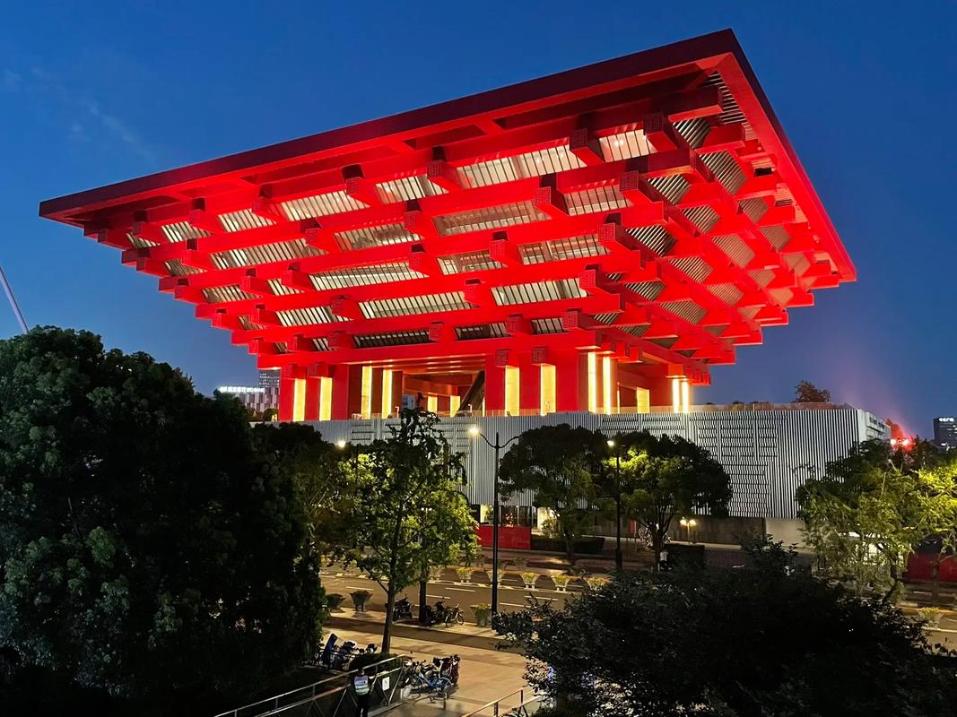
A defining transformation came in the wake of the 2010 Shanghai World Expo. The China Pavilion, famously known as the “Crown of the East,” was preserved and converted into the China Art Museum. Officially opened to the public on October 1, 2012, the museum now spans an immense 167,000 square meters with over 60,000 square meters dedicated to exhibitions. It has become one of the largest museums of modern and contemporary art in Asia.
Architectural Icon: The Crown of the East
Visitors are immediately struck by the museum’s dramatic exterior. The bold red structure, inspired by traditional dougong (interlocking brackets from classical Chinese architecture), rises proudly over the Pudong skyline. Known as the “Crown of the East,” the design blends heritage with modern grandeur and has become one of Shanghai’s architectural landmarks.
Inside, the museum offers a multi-level journey through artistic expression. The interior is divided into several elevation-based zones—49 meters, 41 meters, and 33 meters—each hosting different exhibition themes, allowing for a seamless flow between historical and contemporary works.
Highlights of the Exhibitions
At the heart of the museum’s permanent collection is “The Bright Moon Rises Over the Sea”, which traces the development of modern Chinese art, especially the evolution of the Shanghai School from the 19th century to today. Through paintings, sculptures, and mixed media, visitors witness the creative energy that positioned Shanghai as a cultural powerhouse.
One of the museum’s most celebrated attractions is the multimedia version of “Along the River During the Qingming Festival”, a digital adaptation of the Song Dynasty masterpiece. Originally featured at the 2010 Expo, this immersive exhibit re-creates scenes of bustling medieval life in the ancient capital of Bianjing with vivid sound, animation, and lighting. Entry to this special installation requires a modest ticket but is widely considered a highlight of any visit.
Another major draw is the Wu Guanzhong and Lin Fengmian galleries, showcasing the works of two of China’s most influential modern artists. These collections, largely composed of the artists’ personal donations, provide insight into the merging of Eastern and Western styles during the 20th century.
Global Perspectives and International Collaborations
While rooted in Chinese tradition, the China Art Museum has increasingly embraced international engagement. Its collaboration with prestigious institutions such as the Musée d’Orsay and the Munkácsy Mihály Museum has brought world-class exhibitions to Shanghai. Shows such as “Miller and Courbet: French Naturalism” and “Botero in China” have drawn large audiences and offered unexpected connections between European and Chinese artistic traditions.
The museum also participates in global cultural exchange initiatives, including art tours under the Belt and Road framework. These programs introduce works from countries such as Mongolia and Serbia, enhancing cross-cultural appreciation and offering a broader view of contemporary global art trends.
Immersive Experiences and Educational Engagement
One of the museum’s core missions is to make art accessible and engaging for all ages. Visitors can participate in hands-on activities like printmaking workshops or the re-creation of Dunhuang cave murals, offering an interactive layer to the museum experience. Families and school groups especially benefit from the museum’s integrated “Art Class + Visit” program, which connects classroom learning with on-site exploration.
The museum’s thoughtful layout and themed exhibitions also provide a multisensory journey—visual storytelling, ambient sounds, and even scent-enhanced spaces deepen the connection between viewer and artwork.
Why It Captivates Visitors
Foreign visitors often describe the China Art Museum as “visually stunning” and “deeply impressive.” The bold architecture and grand interior spaces set the tone for a unique cultural experience. Many are surprised and delighted to discover high-quality European art exhibitions within a Chinese museum, noting the diversity and balance of East and West.
One standout feature frequently praised is the museum’s free general admission, which allows for an unhurried, low-barrier exploration of a major art institution. Compared to museums in other global cities, the value offered here is remarkable.
Visitors also appreciate the museum’s modern amenities and spacious galleries, though some note that improvements in multilingual signage and crowd management could further enhance the experience during peak times.
A Cultural Landmark in Modern Shanghai
The China Art Museum is more than a gallery—it’s a statement of cultural pride, ambition, and openness. It tells a story not only of Chinese artistic development but also of Shanghai’s evolving identity as a global cultural hub. Whether admiring classical ink paintings, interacting with digital installations, or exploring international exhibitions, visitors leave with a deeper understanding of China’s creative spirit and its place in the world today.