

A Dish Rooted in History and Tradition
Among the many celebrated dishes of Suzhou cuisine, 松鼠桂鱼, or Squirrel-shaped Mandarin Fish, holds a particularly special place. This iconic dish originates from 松鹤楼 (Songhelou), one of the most famous and historic restaurants in Suzhou. Established centuries ago and honored by Emperor Qianlong during the Qing Dynasty, Songhelou’s version of this dish has become synonymous with authentic Suzhou gastronomy.
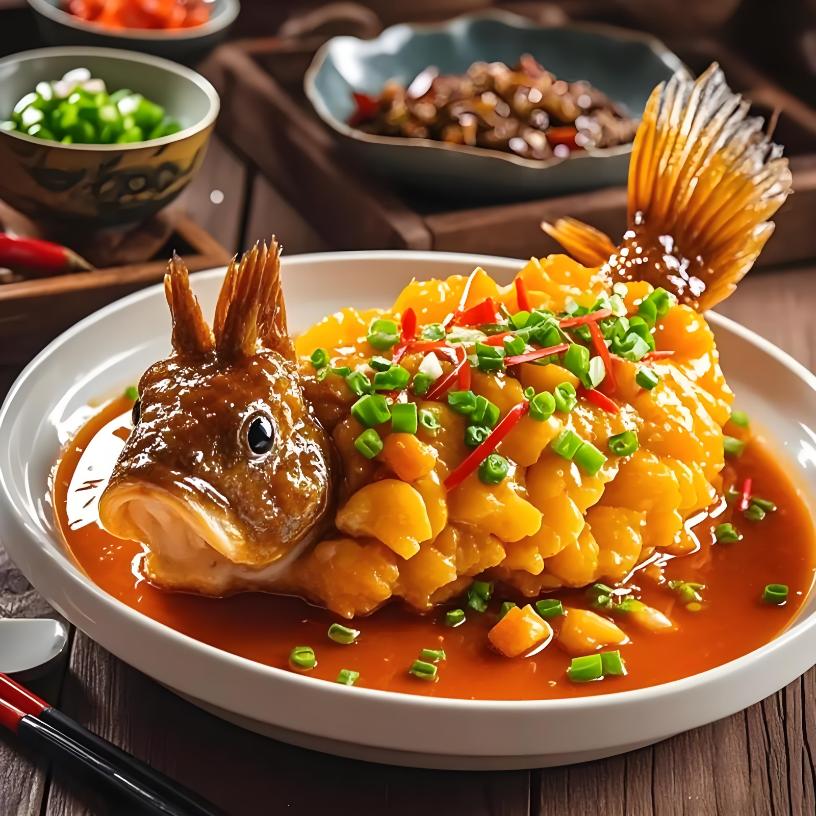
The dish’s name comes from the fish’s unique preparation style, where the mandarin fish is skillfully carved and fried to resemble a squirrel’s bushy tail. This transformation is not only visually stunning but also enhances the texture and flavor, offering a perfect harmony between crispy exterior and tender, flaky meat inside. It is a classic representation of 苏帮菜 (Suzhou cuisine), renowned for its balance of sweetness and sourness.
Cultural Significance of Suzhou Cuisine
Suzhou cuisine is one of the eight great culinary traditions of China, known for its delicate techniques and emphasis on fresh, seasonal ingredients. Unlike the bold and spicy flavors found in other regional cuisines, Suzhou cuisine favors subtle sweetness, light seasoning, and artistic presentation. 松鼠桂鱼 exemplifies these characteristics and serves as a delicious introduction to this elegant food culture.
The dish also carries cultural resonance beyond its taste. During the Qing Dynasty, Emperor Qianlong’s praise of 松鹤楼 and its 松鼠桂鱼 elevated the dish to imperial status, making it a symbol of refined taste and culinary artistry. It represents not just a meal but a cultural experience that connects diners to centuries of tradition and local heritage.
Distinctive Features of Squirrel-shaped Mandarin Fish
What sets 松鼠桂鱼 apart is its remarkable preparation and presentation. The mandarin fish is first cleaned and carefully scored to create a lattice pattern on its body. The fish is then deep-fried until the skin becomes crispy and curls upward, mimicking the bushy tail of a squirrel. This intricate technique requires precision and skill, highlighting the chef’s mastery.
The sauce is equally important—a sweet and sour glaze made with sugar, vinegar, soy sauce, and other secret ingredients that create a bright, tangy coating. The balance of crispy texture and the rich, glossy sauce excites the palate and leaves a lingering, delightful taste.
A Feast for the Senses
Dining on 松鼠桂鱼 is an experience that delights all the senses. The visual appeal of the golden, curved fish immediately draws attention and sparks curiosity. The aroma of the vinegar and caramelized sugar sauce adds an inviting fragrance. The first bite reveals the contrast between crunchy skin and succulent meat, while the interplay of sweet and sour flavors keeps every mouthful intriguing.
This multisensory pleasure has made the dish a favorite not only among locals but also among those who travel to Suzhou seeking authentic culinary adventures.
Where to Enjoy the Authentic Experience
While 松鼠桂鱼 can be found in many restaurants across Suzhou, the original 松鹤楼 remains the definitive place to taste this legendary dish. Founded in 1875, Songhelou has maintained its historic charm and culinary standards, continuing to prepare 松鼠桂鱼 using time-honored methods passed down through generations.
The restaurant itself is an embodiment of Suzhou’s cultural richness, with traditional architecture, elegant décor, and a welcoming atmosphere that transports guests to an earlier era. Enjoying 松鼠桂鱼 here is not just a meal but a cultural immersion.
Local Appreciation and Visitor Feedback
Visitors often express admiration for the balance and refinement of 松鼠桂鱼. Many comment on the artistry involved in its presentation and the delightful contrast in textures and flavors. The dish is frequently recommended as a must-try for those eager to explore Suzhou’s food culture in depth.
Locals take pride in 松鼠桂鱼 as a signature dish that represents their city’s identity and culinary heritage. Its continued popularity across generations underscores its role as a cultural emblem.
Pairing and Serving Suggestions
松鼠桂鱼 is commonly served as a centerpiece in a multi-course meal, often accompanied by steamed rice and seasonal vegetables. The dish pairs well with lighter sides that complement its bold flavor without overpowering it. Traditional Chinese teas, especially jasmine or green tea, provide a refreshing contrast and help cleanse the palate between bites.
A Dish That Tells a Story
More than just a delightful culinary creation, 松鼠桂鱼 tells a story of Suzhou’s history, culture, and artistry. It reflects the city’s approach to food as an expression of elegance, precision, and balance. Each bite connects diners to a rich cultural tapestry that has been carefully preserved and celebrated for centuries.
For visitors exploring Suzhou, trying 松鼠桂鱼 offers a deeper understanding of the region’s gastronomic traditions and a memorable taste of local life.
Inspiration for Culinary Enthusiasts
For those inspired to try their hand at Chinese cooking, 松鼠桂鱼 presents an intriguing challenge. Its combination of knife skills, frying techniques, and sauce-making requires attention to detail and patience. However, mastering this dish can bring rewarding insights into Suzhou’s culinary philosophy and deepen appreciation for the artistry behind Chinese cuisine.
A Lasting Impression
Whether enjoyed in a historic setting like 松鹤楼 or discovered in a local eatery, 松鼠桂鱼 leaves a lasting impression on those who savor it. It stands as a testament to Suzhou’s cultural and culinary heritage, inviting every diner to taste history through its delicate balance of texture, flavor, and artistry.